Psytrance Explained: Sound, Subgenres and Culture
Psytrance explained: Goa origins, the rolling kick-and-bass engine, every subgenre by BPM, festival culture and how to actually mix it as a DJ.
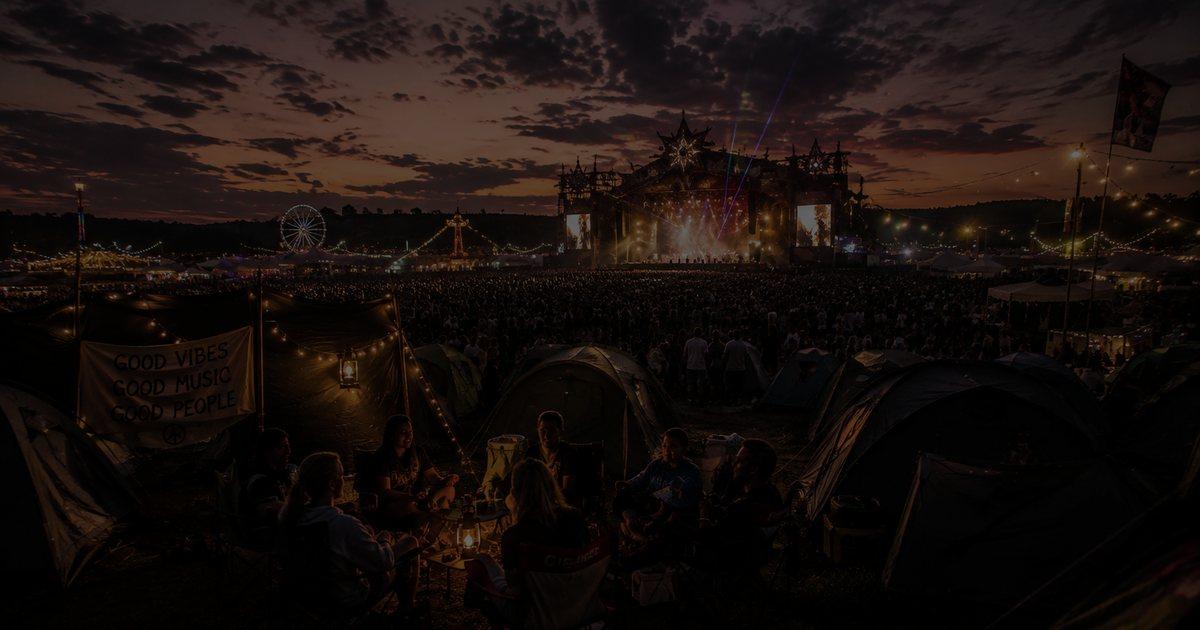
Walk onto a psytrance floor at four in the morning and the first thing you notice is what is missing. There is no drop. There is no build toward a moment everybody films. There is a kick that has been running since sundown, a bassline that keeps folding back on itself, and a few thousand people who show no sign of stopping. Psytrance is the most misread major genre in electronic music: enormous globally, nearly invisible in the mainstream club circuit, and built on production rules that have almost nothing in common with house or techno.
From a beach in Goa to a global circuit
The origin story is unusually literal. Through the 1980s the beaches of Goa in western India hosted a long-running traveller scene where DJs played imported electronic body music, industrial and early acid to crowds that stayed until dawn. Figures like Goa Gil and Raja Ram shaped the aesthetic, and those early DJs worked largely from DAT tape rather than vinyl, which meant sets were assembled in advance as continuous edited journeys rather than mixed record by record. That habit never left. Psytrance still thinks in hours rather than in tracks.
By the early 1990s the sound had a name and a distribution network in London. Dragonfly Records released the compilation Project II Trance in 1993, and in 1994 Graham Wood and Raja Ram of The Infinity Project founded TIP Records together with Ian St Paul. A cluster of London labels followed, and Paul Oakenfold championing the sound on BBC Radio 1's Essential Mix gave it a mainstream foothold in the UK. By the late 1990s the organic, melodic Goa sound had hardened into something more metallic and split into the strains the scene still runs on today.
The rolling bassline is the whole genre
If you learn only one thing about how psytrance is made, learn the kick-and-bass relationship, because everything else is decoration. The kick lands on every beat and is deliberately short: a tight, tuned sub with a fast decay that clears out of the way almost immediately. The bass then fills the space the kick left behind, typically as three sixteenth notes between each kick, gated or sidechained hard enough that the two never overlap. The result is a continuous rolling pulse at sixteenth-note resolution, functioning as one interlocking instrument rather than two.
That is the opposite of house, where the bassline sits underneath a longer kick and the two share the low end. It also explains why the tempos work: at 145 BPM those sixteenths arrive fast enough to read as texture rather than as rhythm. On top sit acid lines descended from the 303, FM squelches, heavily processed vocal samples and wide, fast-moving effects that trade places every few bars. Arrangement is additive. A seven or eight minute track adds and strips layers across its whole run instead of resetting at a drop. The synthesis fundamentals in our sound design guide transfer directly here; psytrance simply pushes the modulation much further than most genres dare.
The subgenre map
- Full-on — roughly 140 to 148 BPM. The festival mainstage sound: bright, melodic, big lead lines and playful basslines that move across octaves.
- Progressive psy — roughly 138 to 144 BPM. Slower, darker, more repetitive and far closer to a club record. The easiest entry point for house and techno DJs.
- Dark psy — around 148 to 155 BPM. Cold, dissonant, horror-adjacent sound design and almost no conventional melody.
- Forest — roughly 150 to 160 BPM. Organic, murky and claustrophobic, built from acoustic-sounding textures and tangled percussion rather than big leads.
- Hi-tech — dark psy taken to its logical extreme, from roughly 180 BPM upward. Clinically quantised, relentless, and difficult listening entirely by design.
- Goa revival — a healthy modern scene reconstructing the layered, arpeggiated 1990s sound with contemporary production.
Night, morning and the timetable as an art form
Psytrance festivals programme by time of day with more discipline than almost any other scene. The darkest and fastest music runs in the small hours. As the sun comes up the floor shifts into what everyone calls morning psy, brighter and more melodic and deliberately euphoric, and the afternoon drops into progressive or ambient. Sets are long, frequently two hours or more, and the arc of an entire day is the unit of composition. The reason is structural: the crowd is largely the same crowd for a week, so a promoter cannot simply stack peak-time headliners and hope.
The circuit is genuinely international. Boom Festival, held biennially by the lake at Idanha-a-Nova in Portugal, is the scene's best-known gathering and operates as much as an art and sustainability project as a music event. Ozora in Hungary grew out of the Solipse eclipse gathering of 1999 and was established as an annual festival in 2004; it now functions as the hub of European psytrance culture. Both lean hard on UV decor, sculptural stages, workshop areas and dedicated chill-out floors. The visual language is not a backdrop, it is half the product.
Underground by design, mainstream by accident
Psytrance never needed the mainstream, which is precisely why its occasional crossovers land so hard. The clearest example is Great Spirit by Vini Vici and Armin van Buuren featuring Hilight Tribe, released in December 2016, which carried a recognisably psytrance bassline onto festival mainstages worldwide and pulled a generation of trance listeners toward the genre. Israeli acts including Infected Mushroom and Astrix had already built long international careers, but that record, and the mainstage run it had through 2017, moved the sound into rooms that had never programmed it.
What did not happen is more interesting. The core scene did not restructure itself around that success. It kept its own festivals, its own labels, its own release cycle and its own audience, largely outside the Beatport-and-Ibiza economy that shapes most of dance music. If you are arriving from the trance side, our trance guide and progressive trance guide map the neighbouring territory.
How to approach it as a DJ
Start at the progressive psy end. At 138 to 144 BPM it sits close enough to melodic techno that your existing instincts about tension and patience still apply, and the arrangements are long enough to reward proper blending. Mix in 32 or 64 bar phrases rather than quick cuts, because psytrance transitions are slow by convention and a hard swap reads as amateur. Watch the root notes: so much harmonic weight sits in one repeating bass note that a semitone clash is brutally obvious in a way it never is in house. And build sets that travel across an hour rather than peaking every eight minutes. The programming logic in our guide to building a DJ set applies directly, just stretched out.
Psytrance rewards patience more than any other branch of dance music. It asks you to stop listening for the next event and start hearing what a single sustained groove does to a room over the course of an hour. That is a harder sell than a drop, which is exactly why the scene has survived three decades without ever really needing anyone's permission.
Frequently Asked Questions
What BPM is psytrance?
Most psytrance sits between 138 and 150 BPM. Progressive psy is the slowest at roughly 138 to 144, full-on runs about 140 to 148, dark psy pushes into the high 140s and low 150s, forest sits around 150 to 160, and hi-tech starts near 180 BPM and keeps going.
What is the difference between Goa trance and psytrance?
Goa trance is the original 1990s form: organic, heavily arpeggiated, melodic and densely layered. Psytrance is what it became from the late 1990s onward, when the sound turned more metallic and precise and split into full-on, progressive psy and dark psy.
Is psytrance hard to mix?
Not technically, since almost everything is 4/4 and rigidly quantised, but it demands patience. Transitions run 32 to 64 bars, and because the bassline hammers one root note, key clashes are far more exposed than they are in house.
What are the biggest psytrance festivals?
Boom Festival at Idanha-a-Nova in Portugal, which runs biennially, and Ozora in Hungary, which grew out of the 1999 Solipse eclipse gathering and has been annual since 2004. Both run for around a week and are heavily art-driven.
Where should a newcomer start listening?
Start with progressive psy, which is closest to melodic techno in tempo and structure, then move to full-on for the melodic festival sound. Save dark psy and hi-tech until the rolling kick-and-bass pattern feels natural.
Read next
Guide
No Phone Signal at Festivals: Why, and How to Find Friends
Guide
Festival Set Times Explained: When to Be at Which Stage
Guide
Organic House Explained: Sound, Labels and DJ Craft
Guide
Club Sound Systems Explained: Why Rooms Hit Harder
Guide
How to Make a Remix That Actually Goes Viral in 2026
Guide