Sound Design Basics for EDM: Make Your Own Sounds
Learn EDM sound design from the ground up: oscillators, filters, envelopes, LFOs and the workflow that turns a raw synth into your own signature sound.
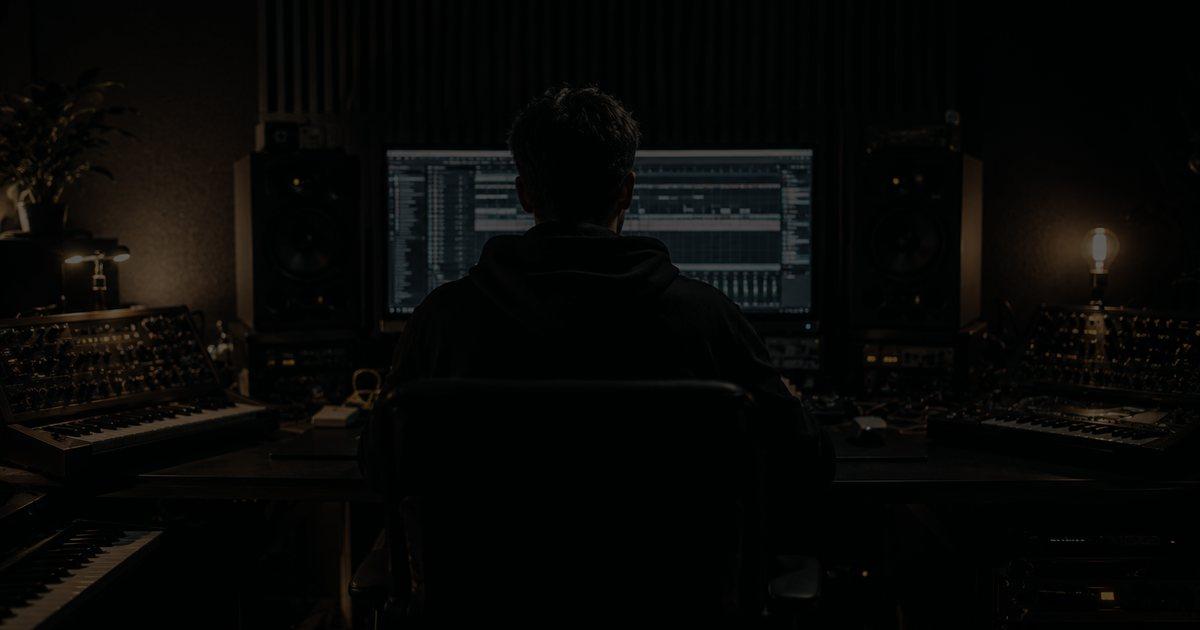
Presets get you a track. Sound design gets you a sound nobody else has. Every producer who ends up with a recognizable sonic identity, the kind you can pick out on a festival main stage within two bars, got there by learning what actually happens inside a synthesizer instead of scrolling through factory patches. This guide breaks down the real fundamentals of designing sounds for EDM, in the order a working producer would actually approach them.
Why Sound Design Is Worth the Effort
Presets are fine as a starting point, and even seasoned producers use them. The problem is that thousands of other people loaded the exact same patch this week. When your lead, your bass and your pluck all come off the shelf, your track inherits a generic character before you have written a single note. Learning to shape sounds yourself does two things: it makes your music sound like you, and it makes you a faster, more decisive producer because you stop hunting for the right preset and start building it.
Sound design is also one of the deepest skills in electronic music. You can spend years on it and still find new territory, which is exactly why it rewards curiosity. You do not need a rack of expensive hardware either. One capable software synth and a good pair of ears will take you a long way.
The Building Blocks of Synthesis
Almost every synth, hardware or software, is built from the same handful of components. Master these and you can walk up to any instrument and get results, because the labels change but the logic does not.
Oscillators: the raw tone
Oscillators generate the initial waveform, and their shape decides the harmonic content you have to work with. The classic four are worth knowing by feel:
- Sine - a pure tone with no harmonics. The foundation of most sub bass.
- Sawtooth - bright and buzzy, packed with harmonics. The backbone of supersaw leads and big-room chords.
- Square / pulse - hollow and reedy, great for plucks and retro leads.
- Triangle - soft and mellow, a gentler alternative to the sine for bass and pads.
Stacking or detuning several oscillators is where a lot of the EDM magic lives. Slight detuning creates the wide, shimmering chorus effect behind nearly every anthemic lead.
Filters: carving the shape
A filter removes frequencies to sculpt the tone. A low-pass filter is the one you will reach for most: it cuts the highs and lets the lows through, and sweeping its cutoff is the single most recognizable move in electronic music. The resonance control emphasizes frequencies right at the cutoff point, adding that vocal, whistling bite as you open a filter up.
Envelopes: how a sound evolves
An envelope controls how a parameter changes over the life of a note, described by four stages known as ADSR: Attack (how fast it fades in), Decay (the drop to the sustain level), Sustain (the held level while a key is down) and Release (the tail after you let go). A fast attack and short decay give you a snappy pluck; a slow attack and long release give you an evolving pad. Envelopes usually control volume, but routing one to the filter cutoff is where sounds start to feel alive.
LFOs and modulation: movement
A Low Frequency Oscillator is an inaudible wave used to modulate other parameters rhythmically. Point an LFO at pitch and you get vibrato; at volume, tremolo; at filter cutoff, a rhythmic wobble that is the entire basis of dubstep bass. Modulation is what separates a static, lifeless patch from one that breathes.
A Practical First-Sound Workflow
Theory sticks faster when you build something. Here is a reliable path to your first custom lead:
- Start with a single sawtooth oscillator so you have plenty of harmonics to filter.
- Add a second saw and detune it a few cents against the first for width.
- Drop a low-pass filter in and pull the cutoff back until the sound is a little dull.
- Route the filter envelope to the cutoff with a short decay, so each note opens bright and settles - instant plucky movement.
- Add a touch of resonance for character, then dial in reverb and delay to place it in space.
That recipe alone is the skeleton behind countless progressive house and melodic leads. Once it makes sense, changing the oscillator, the envelope timing or the modulation is how you make it your own. Layering is the next step: a designed lead almost never sits alone, and combining it with a bass and drum foundation is its own discipline covered in our guide to layering kicks and bass in EDM.
Designing the Sounds Between the Sounds
Leads and basses get the attention, but a huge part of a polished EDM record is the transitional and textural material - the risers, sweeps, impacts and noise beds that glue sections together. A lot of these are built from a simple noise oscillator run through an automated filter, and they do more for perceived production quality than most people expect. Our breakdown of white noise risers and FX in EDM goes deep on that toolkit, and pairing designed sounds with the right reverb and delay treatment is what makes them feel three-dimensional rather than pasted on.
Developing Your Ear
Ultimately, sound design is a listening skill. The single most effective exercise is reverse-engineering: load a sound you love, then try to rebuild it from scratch on your own synth. You will fail at first, and each failure teaches you exactly which control you did not understand yet. Over months this builds an internal map that connects what you hear to how it was made, so that when an idea appears in your head you know roughly which knobs get you there.
German DJ Maxim Schunk, whose progressive-house and melodic releases have gathered more than 250 million Spotify streams, is a good example of how a consistent sonic character carries across a catalogue - the leads and textures feel like they belong to the same hand. You can hear that continuity across his releases on Spotify. If you want to go deeper on a specific instrument, Serum remains the industry-standard starting synth, and our Serum beginners guide walks through it patch by patch.
Conclusion
You do not need to master everything at once. Learn one oscillator, one filter and one envelope well, build a handful of your own sounds, and reverse-engineer records you admire. Do that consistently and a personal sonic signature stops being an abstract goal and becomes the natural byproduct of understanding your tools. That is the real payoff of sound design: not just better sounds, but sounds that are unmistakably yours.
Frequently Asked Questions
What is sound design in EDM?
Sound design is the craft of creating and shaping sounds from scratch, usually with a synthesizer, rather than relying on factory presets. In EDM it covers everything from leads, basses and plucks to risers and transition FX, and it is the main way producers build a recognizable sonic identity.
Do I need expensive gear to start sound design?
No. One capable software synth included with your DAW, or a free option, plus a decent pair of headphones or monitors, is enough to learn every fundamental. Skill in shaping oscillators, filters and envelopes matters far more than the price of the instrument.
Which synthesizer should a beginner learn first?
Any subtractive synth works because the core concepts transfer everywhere, but Serum is the most common industry starting point thanks to its clear visual interface. Learn one synth deeply rather than collecting many, since the oscillator, filter, envelope and LFO logic is shared across almost all of them.
What is the fastest way to improve at sound design?
Reverse-engineering. Pick a sound you love, then try to rebuild it from scratch on your own synth. Each attempt reveals which control you did not fully understand, and over time this trains your ear to connect what you hear with how it was made.
What is the difference between a filter and an envelope?
A filter removes frequencies to shape the tone at any moment, for example a low-pass filter cutting the highs. An envelope controls how a parameter changes over the life of a note using attack, decay, sustain and release. Routing an envelope to a filter cutoff combines both, which is how most lively, evolving sounds are made.
Read next
Guide
Club Sound Systems Explained: Why Rooms Hit Harder
Guide
How to Remix a Song into Progressive House: A Producer's Step-by-Step Guide
Guide
How to Master a Track in EDM: A Producer's Guide
Guide
How to EQ a Mix in EDM: A Pro Clarity Guide
Guide
Song Arrangement in EDM: How to Structure a Track
Guide