Organic House Explained: Sound, Labels and DJ Craft
Organic house explained: the acoustic palette, the parties and labels that built it, why Beatport split the genre, and how to actually DJ it well.
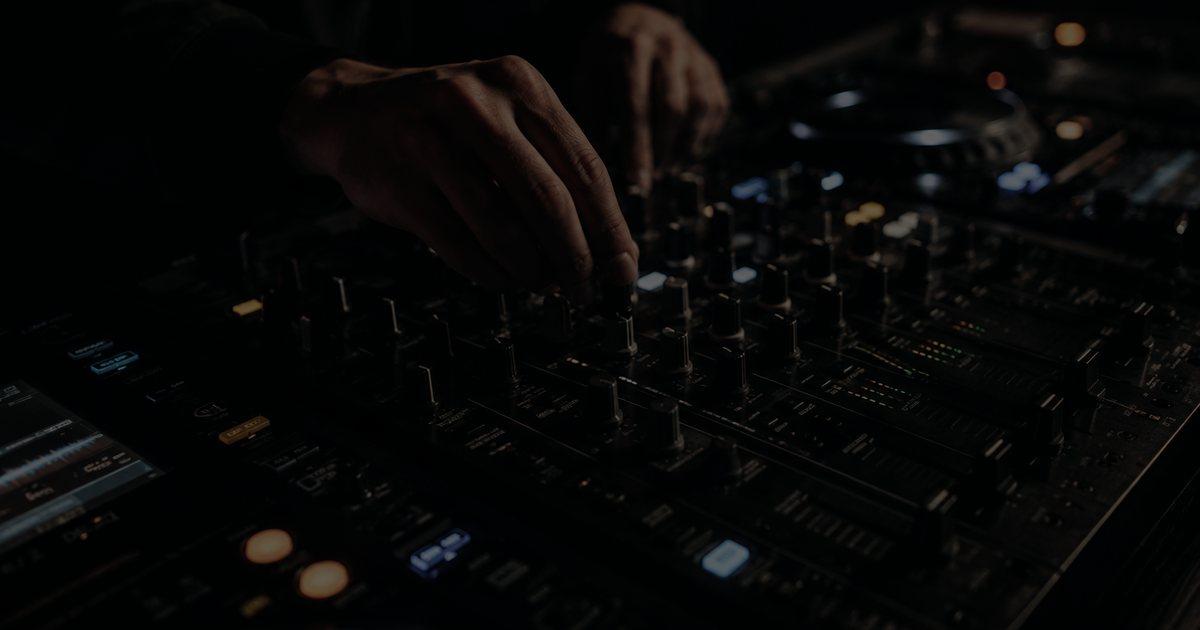
There is a moment at the end of a good open-air day party — sun low, dust visible in the light, a few hundred people moving at roughly half the speed they would in a basement — where a record arrives that sounds like a marimba, a field recording and a kick drum agreed to share a room. That sound has a name, a set of labels behind it and, by now, its own genre tag in the shops. It is called organic house, and it is one of the few corners of dance music where restraint rather than pressure is the entire point.
What organic house actually is
The defining trait is timbre, not tempo. Organic house builds its melodic material out of acoustic instruments or convincing emulations of them: marimba, kalimba, vibraphone, hand percussion, plucked strings, breathy woodwind. Around that sit textures most club music strips out on purpose — vinyl crackle, room noise, foley, field recordings of water, wind, markets, crowds. Where big-room production chases a clean, loud, fully controlled signal, organic house deliberately leaves dirt in the picture.
Tempo usually clusters around 120 BPM, with real records landing anywhere from roughly 115 to 125: slower and softer than peak-time house, fast enough to still be a dance record. The bass is round rather than aggressive. The kick is present but rarely the loudest thing in the mix. Vocals, when they appear, tend to be wordless, heavily processed, or sung in a language most of the floor does not speak — texture rather than message.
It is worth separating this from its neighbours. It is not tropical house, which uses a similar instrument palette for a much sunnier, poppier purpose. It is not quite deep house either, although it inherited deep house's tolerance for long, event-free stretches. And it is a different animal from the melodic house and melodic techno axis, which is engineered around tension, build and release. Organic house is engineered around atmosphere that barely resolves at all.
The parties that built the sound
This genre came out of rooms — or rather roofs and fields — long before it came out of a genre dropdown. Lee Burridge launched All Day I Dream on a Brooklyn rooftop in the late summer of 2011, with Matthew Dekay as his early musical partner and the record label following the same year. Burridge had been collecting this kind of material since around 2007, when he had had enough of minimal and wanted something warmer and less macho than what the circuit was offering. The formula was daylight, decoration, a long arc and records nobody else was playing. It worked well enough that a one-off rooftop party turned into a touring day-party series, reaching cities including Barcelona, Berlin and Sydney.
The other pillar is Anjunadeep, founded in London in 2005 by Above & Beyond together with James Grant as an outlet for the deeper end of their sets. Its lineage runs through progressive house rather than classic house, which is precisely why Anjunadeep records tend to be more structured and more overtly melodic than All Day I Dream records — the two catalogues do not mix interchangeably even though the press files them together. The label's long-running compilation series, mixed by James Grant and Jody Wisternoff, did as much as any club night to define how this music is supposed to feel on headphones, and the roster has been a reliable launch pad for artists, Lane 8 among them.
Around those two sit the smaller institutions that give the genre its spine: Sol Selectas, founded by Sabo in New York in 2006 and now run together with Helia Jamali, which pushes the folkloric, percussion-heavy end of the palette; and Do Not Sit On The Furniture in Miami Beach, opened by Behrouz with Will Renuart, a small club and label that has been an unglamorous engine room for this sound for years.
How Beatport made it a category, then split it
For most of the 2010s this material had nowhere to live in the retail taxonomy. Releases were scattered across deep house, electronica, melodic house and techno and afro house, and they vanished into charts they did not belong in. That changed in June 2020, when Beatport introduced Organic House / Downtempo as its own genre, framed as the deeper, slower and more meditative end of house. Overnight the sound had a chart, which meant it had A&R attention, which meant it had a business.
The more revealing move came later. On 2 April 2025, Beatport gave Downtempo a standalone genre page, separating it from organic house after feedback from the community. That is not housekeeping. Downtempo is a wide umbrella spanning Balearic, lo-fi, trip-hop and chillout; organic house is a specific, danceable, four-to-the-floor thing. Bundled together, a 95 BPM ambient record and a 120 BPM dancefloor record were competing in the same chart. Splitting them gave both honest visibility — and it tells you how much volume the category was carrying by then.
Inside the records: what producers actually do
Three habits separate a convincing organic house record from a house track with a marimba pasted on top.
- Percussion is played, not programmed. Shakers, congas and hand drums carry small timing and velocity variations. Perfectly quantised loops of the same samples read as synthetic immediately, because the ear registers the grid before it registers the sound.
- Noise is an instrument. Vinyl crackle, tape hiss, a distant recording of a river or a street — these go in as a bed, not a garnish. They glue disparate samples together by giving everything a shared imaginary room.
- Arrangements move slowly and never quite arrive. Eight-minute runtimes are normal. Elements enter one at a time and leave the same way. There is often no drop in any conventional sense, only a widening and narrowing of the picture.
The most common failure is treating the palette as a preset. A kalimba over a generic deep house groove is not organic house; it is deep house in costume. The genre lives or dies on whether the acoustic material is genuinely driving the arrangement rather than decorating it.
Playing it without putting the floor to sleep
For a sound so often described as relaxing, organic house is unusually demanding to DJ. Records are long, the energy differences between them are small, and the tools that normally rescue a struggling set — a big drop, a tempo jump, an obvious vocal — are simply not available. What replaces them is patience and sequencing. Mixes want to be long, sixty-four bars or more, letting two percussion beds interlock rather than cutting between them. Key matters more than usual, because sustained pads and plucked instruments will clash audibly where a filtered loop would happily sit anywhere.
It also rewards knowing where it belongs in an evening. This is opening and closing music, sunset and sunrise music, not 1 a.m. music. It sits naturally next to the slower end of afro house, which shares much of the percussion vocabulary at a higher intensity — a useful bridge when you need to lift a room without breaking the mood. If you are working out how to shape that arc, the general principles of building a DJ set still apply; they are just stretched over a longer timeline, with far less headroom for a mistake.
The short version
Organic house is what happens when dance music stops trying to overwhelm you. It came from a rooftop in Brooklyn and a deep-house sublabel in London, it was handed a name by a record shop's genre menu almost a decade later, and its rules are simple even if executing them is not: real instruments, real room noise, real time. Played in the wrong slot it empties a floor. Played in the right one, people still talk about it years later.
Frequently Asked Questions
What is organic house?
A slower, texture-led branch of house music built around acoustic or acoustic-sounding instruments such as marimba, kalimba, hand percussion and plucked strings, layered with field recordings, vinyl crackle and room noise. It usually sits around 120 BPM, roughly 115 to 125, and favours long, gradually evolving arrangements over drops.
How is organic house different from tropical house?
They share an instrument palette but not a purpose. Tropical house uses those sounds for bright, pop-facing hooks aimed at radio and playlists. Organic house uses them for atmosphere on a dancefloor, with longer runtimes, no conventional drop and a much darker, more meditative tone.
Which labels define the organic house sound?
All Day I Dream, launched by Lee Burridge in 2011, and Anjunadeep, founded in London in 2005 by Above & Beyond with James Grant, are the two pillars. Smaller but influential are Sol Selectas, started by Sabo in New York in 2006, and Do Not Sit On The Furniture in Miami Beach, opened by Behrouz with Will Renuart.
Why did Beatport separate Downtempo from Organic House?
Beatport introduced Organic House / Downtempo as a single genre in June 2020, then gave Downtempo its own standalone genre page on 2 April 2025 after community feedback. The two had grown too different: Downtempo is a wide umbrella covering Balearic, lo-fi, trip-hop and chillout, while organic house is a specific four-to-the-floor dancefloor sound.
When should a DJ play organic house in a set?
It belongs at the edges of a night rather than in the middle. Opening sets, sunsets, closing hours and daytime open airs suit it best. Mixes want to be long, often sixty-four bars or more, and harmonic mixing matters more than usual because sustained pads and plucked instruments clash audibly.
Read next
Guide
Psytrance Explained: Sound, Subgenres and Culture
Listening
The Songs of Summer 2026 — A DJ's Take on What Works on the Dancefloor
Guide
No Phone Signal at Festivals: Why, and How to Find Friends
Guide
Playing Vinyl at Festivals: Feedback, Wind, Heat and Riders
Guide
DJ Effects Explained: How to Use Echo, Filter and Reverb
Guide