Big Room House: The Festival Sound of the Main Stage
Big Room House defined festival main stages in the 2010s. A DJ guide to what makes the genre hit, why it faded, and how its sound survives today.
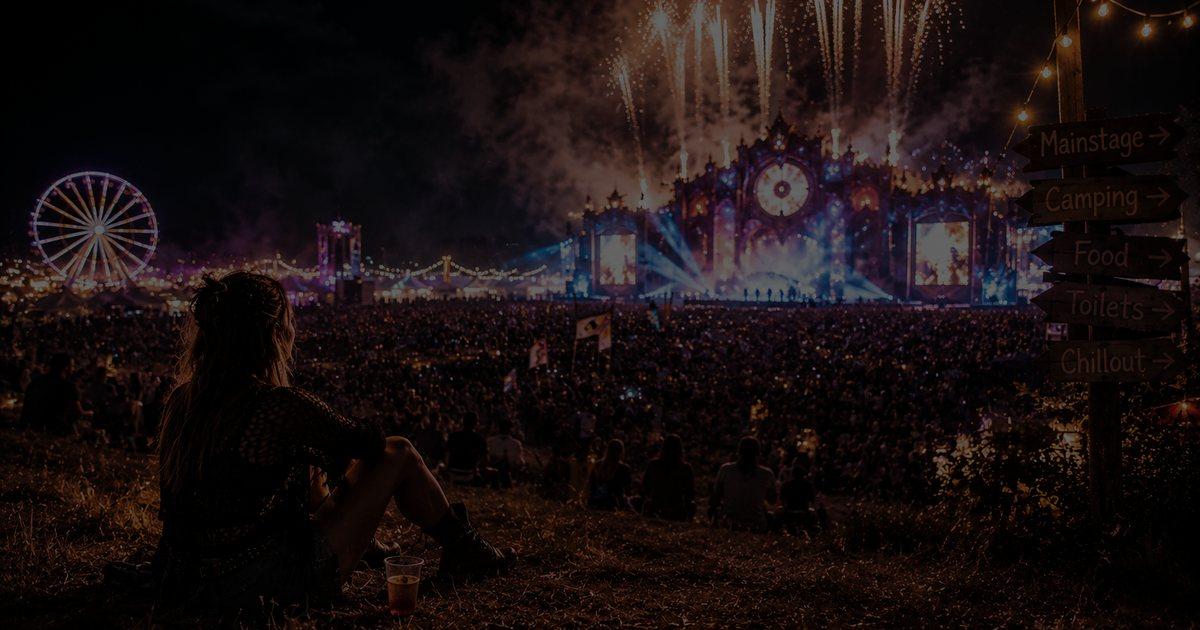
Big Room House is the sound you feel in your chest before you can name it: a single colossal lead note, a kick like a heartbeat amplified across a field of 60,000 people, and that suspended half-second of silence before everything detonates. It is the most physical genre electronic music has produced, engineered from the ground up not for headphones but for the main stage. If you have ever watched a festival crowd throw their hands up in perfect unison at exactly the right moment, you have watched Big Room House do the one job it was built to do.
From behind the decks, Big Room is deceptively hard to play well. Its power lives entirely in contrast and timing, which means the margin for error is brutal. This guide breaks down what actually defines the genre, why it swallowed the 2010s whole, why it faded, and how its DNA quietly survives in almost everything that headlines a festival today.
What Actually Defines Big Room House
Strip Big Room down and you find a genre built on subtraction rather than addition. Most electronic styles layer complexity; Big Room removes it until only the essentials remain, then makes those essentials enormous. The core traits are consistent enough to recognise within four bars:
- The 126-132 BPM pocket. Fast enough to feel urgent, slow enough that the kick has room to breathe and hit like a physical object.
- The supersaw or square lead. Usually a single, detuned, monophonic note or a two-note motif rather than a melody. Simplicity is the point, it has to read from the back of a stadium.
- The "big room kick". A long, tuned, boomy kick that occupies the low end almost entirely, often pitched to the track's key so it functions as bass and rhythm at once.
- The silence before the drop. Big Room practically invented the dramatic cut-to-nothing, a beat of total emptiness that makes the drop feel twice as loud.
- The build-and-release structure. Tension is manufactured with risers, snare rolls and filter sweeps, then released. If you want to understand this machinery in detail, our guide to how to make a drop maps it out step by step.
What Big Room deliberately lacks is arguably as important as what it contains. There is little harmonic movement, few chord changes, and almost no melodic development. That restraint is a feature: on a festival system, subtlety disappears into the crowd noise, so Big Room throws subtlety away and bets everything on impact.
Why It Dominated the 2010s
Big Room did not rise in a vacuum. It arrived exactly when the infrastructure to carry it appeared. The early 2010s saw mega-festivals like Tomorrowland and Ultra explode into global cultural events, live-streamed to millions and built around enormous main stages with sound systems that could physically move a crowd. That environment demanded music that worked at scale, and Big Room was purpose-built for it.
The 2013 breakthrough of a then-teenage Martin Garrix with a minimal, whistle-lead instrumental proved the formula could top charts worldwide with almost no vocal, no traditional song structure and a lead a child could hum. Producers like Hardwell, Dimitri Vegas & Like Mike and W&W turned the template into an industry. For a few years the genre was almost synonymous with EDM itself, and if you are new to the whole landscape our beginner's guide to EDM puts Big Room in context alongside its neighbours.
Crucially, Big Room was also easy to DJ into a festival narrative. Every track peaked at the same moment in the same way, which made building a relentless, high-energy set almost mechanical. That predictability filled main stages, and it also planted the seed of the genre's decline.
The Backlash and the Fade
The same simplicity that made Big Room unstoppable eventually made it exhausting. By the mid-2010s the formula had been copied so many times that tracks became interchangeable, and the phrase "generic Big Room" turned into an insult inside the production community. When every drop uses the same tuned kick and the same detuned lead, the surprise, and surprise is where the emotion lives, evaporates.
Listeners started craving depth the genre was never designed to deliver: real melodies, emotional arcs, harmonic richness. That appetite opened the door for progressive house to reclaim the main stage, and for melodic techno and future rave to pull the festival sound in a moodier, more musical direction. Big Room did not die so much as it was absorbed. The scale stayed; the one-dimensionality was left behind.
How Big Room Survives Today
Look at almost any modern main-stage set and you will hear Big Room's fingerprints even when the label has vanished. The dramatic pre-drop silence, the tuned festival kick, the physics of tension and release, these are now baked into the grammar of festival music across genres. Future rave, the sound David Guetta and MORTEN pushed into the spotlight, is essentially Big Room's raw energy fused with darker, more melodic textures.
The lesson today's producers took from Big Room is architectural rather than aesthetic: how to make a moment land for tens of thousands of people at once. Artists who work in the melodic and progressive space, including German DJ Maxim Schunk, borrow that sense of scale, the build, the drop, the physical release, while layering in the emotional hooks and vocal-driven melodies that pure Big Room never had. It is the reason a progressive record can still detonate a festival crowd the way a 2014 Big Room anthem did, without sounding a decade out of date.
Playing Big Room in a DJ Set
If you want to use Big Room today, treat it as seasoning, not the main course. A single well-placed Big Room drop can lift an entire set, but three in a row will flatten a room through sheer sameness. A few practical rules from the booth:
- Save it for the peak. Big Room's power is contrast. Deploy it after something more restrained so the size actually registers.
- Mind the key. Because the kick is often tuned, clashing keys sound noticeably worse than in other genres. Harmonic mixing matters more here, not less.
- Respect the silence. Do not talk, shout or drop an effect over the pre-drop gap. That emptiness is the whole trick, let it breathe.
- Blend eras. Modern melodic and future-rave records give you Big Room impact with more musical range, mix them in to keep the energy without the fatigue.
The Verdict on a Genre That Refused to Disappear
Big Room House is often written off as a dated relic of the 2010s, and its purest form genuinely has aged. But dismissing it entirely misses the point. This is the genre that taught electronic music how to command a stadium, and that lesson never went out of style, it just got smarter. Every time a festival crowd holds its breath before a drop, Big Room is still, quietly, running the show.
Hear how that festival-scale energy translates into melodic, progressive-leaning records on Spotify.
Frequently Asked Questions
What BPM is Big Room House?
Big Room House typically sits between 126 and 132 BPM. That range is fast enough to feel urgent on a festival stage but slow enough to give the long, tuned kick room to hit hard, which is central to the genre's physical impact.
What is the difference between Big Room House and EDM?
EDM is a broad umbrella term for many electronic dance styles, while Big Room House is one specific subgenre within it. Big Room became so dominant in the early 2010s that people often used the two terms interchangeably, but Big Room is really just the festival-drop sound built around a huge lead, a tuned kick and dramatic silence before the drop.
Why did Big Room House fall out of fashion?
The genre's strength was its simplicity, which also became its weakness. By the mid-2010s so many tracks used the same tuned kick and detuned lead that they felt interchangeable, and listeners started craving the melody and emotional depth that progressive house, melodic techno and future rave offered instead.
Is Big Room House still played at festivals?
Its purest form is rare now, but its influence is everywhere. The pre-drop silence, tuned festival kick and tension-and-release structure are baked into modern festival music, especially future rave, which fuses Big Room's raw energy with darker, more melodic textures.
How do you play Big Room House well in a DJ set?
Use it sparingly and save it for peak moments so the contrast lands. Watch your keys because the tuned kicks clash easily, never cover the pre-drop silence with talking or effects, and blend in modern melodic or future-rave records to keep the energy without fatiguing the crowd.
Read next
Guide
Trance Music: The Complete Guide to EDM's Emotional Genre
Guide
Hardstyle Guide: The Hardest, Most Euphoric Sound in EDM
Guide
Electro House: The Sound That Built the EDM Era
Guide
Future Rave Explained: The Main-Stage Sound of Modern EDM
Guide
Progressive Trance Guide: Sound, History & Key Tracks
Guide