Eight Video Games That Brought Rave Into the Living Room
From WipEout to Fortnite: eight video games that put rave, house and techno on millions of screens, and what each one changed for dance music culture.
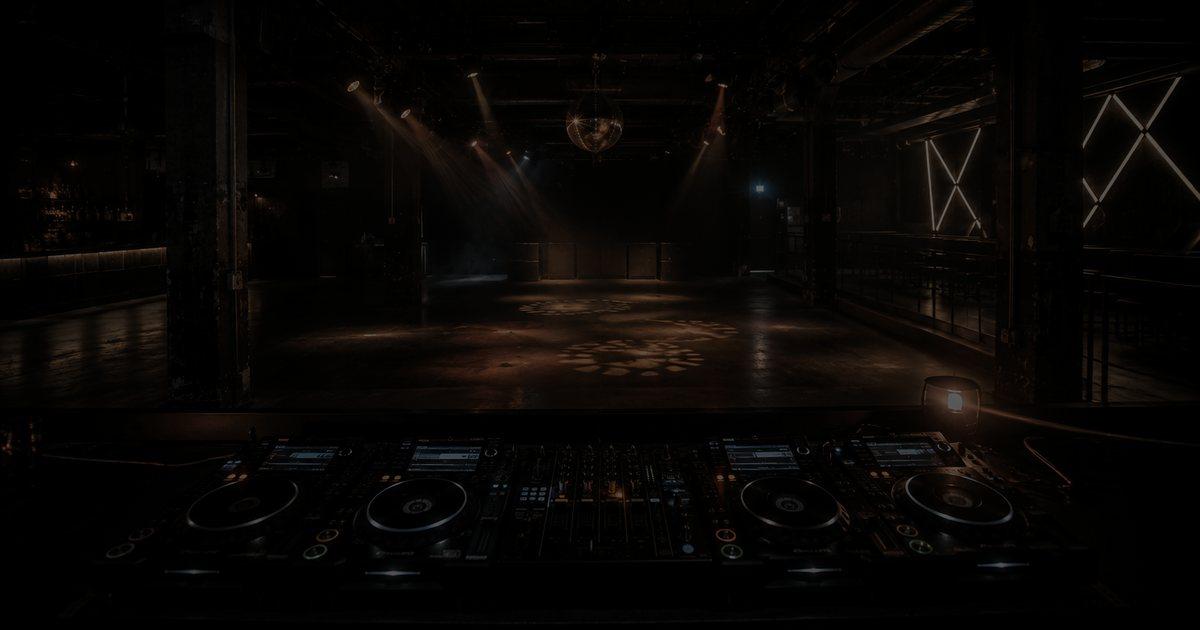
On 29 September 1995, Sony launched the PlayStation in the UK, and one of the discs on the shelf next to it looked nothing like a video game. The box for WipEout had been designed to look more like a record than a game. Inside, anti-gravity racers screamed around neon tracks to Leftfield, Orbital and The Chemical Brothers. Psygnosis also got machines into clubs such as Cream in Liverpool, where, as one former staff member later recalled to Mixmag, very drunk clubbers tried to fly the ships and kept smashing into the side of the track.
That image, a club crowd playing a game built to sound like a club, is where this list starts. Radio was slow to play electronic music and television rarely took it seriously, but games put it on the speakers of millions of teenagers who had never been to a rave. Here are eight games that did that, and what each one changed.
WipEout (1995): the game that dressed like a record
Psygnosis, the Liverpool studio Sony had bought in 1993, did not ask its designers for a game cover. It went to The Designers Republic, the Sheffield studio behind the look of Warp Records, and let them style the whole thing: box, manual, menus, team logos. "We didn't want to design the game," Ian Anderson of The Designers Republic told Mixmag, "we wanted to create the world in which it existed." Most of the music was by in-house composer Tim Wright, working as CoLD SToRAGE, and some versions also licensed Leftfield's "Afro-Ride", The Chemical Brothers' "Chemical Beats" and Orbital's "Wipeout (P.E.T.R.O.L.)". According to the BFI, it became the best-selling PlayStation launch title in Europe.
What it changed: it proved that the rave aesthetic of flyers, sleeves and typography could sell hardware. Anyone who knows the illustrators who drew the scene on paper will recognise where WipEout got its look. This time the graphics were selling a console, not a party.
WipEout 2097 (1996): when the labels came knocking
For the first game, Psygnosis had gone looking for artists. For the sequel, Tim Wright told Mixmag, "the record labels were knocking on the door." Rob Manley of Virgin is credited as A&R, and the soundtrack reads like a big-beat and electronica festival bill: The Chemical Brothers' "Loops of Fury", The Future Sound of London's "We Have Explosive", Underworld's "Tin There", Fluke's "Atom Bomb", plus tracks by The Prodigy and Photek. The companion album, released separately, added Daft Punk's "Musique", and in the US the game and album were called Wipeout XL.
What it changed: it made a game soundtrack something labels pitched for, not something they licensed reluctantly. The year Underworld turned a B-side into a Trainspotting anthem, they were also on a PlayStation disc. Film and games had become a second route to an audience that the charts did not offer.
Dance Dance Revolution (1998): the dance floor became the controller
Konami's arcade machine reached Japanese arcades in late September 1998 and came to Europe in 1999 as Dancing Stage. It swapped the joystick for a metal platform with four arrows, and its original song list included "Butterfly" by the Swedish group smile.dk, alongside Eurobeat, covers and other bright, fast pop-dance tracks. It was not underground music. It was chart dance pop, the kind of record underground clubs left alone.
What it changed: DDR made dancing to electronic music a public, competitive, sober activity in shopping centres. It also gave the cheerful end of the nineties, the world described in our piece on Eurodance and who really sang it, a second life that outlasted the charts by decades.
Wip3out (1999): a superstar DJ as music director
By the third game, the series no longer just licensed tracks. It gave the job to a DJ. Sasha was music director for Wip3out, released in September 1999, and recorded six tracks for it, most of them named after the game's racing teams, among them "Feisar", "Auricom" and "Goteki 45". Around them sat Orbital, Underworld, The Chemical Brothers, Propellerheads and Paul van Dyk.
What it changed: it treated a soundtrack as a DJ's work rather than a list of licensed tracks. It came out at the height of the superstar-DJ era, when a name like Sasha's could sell a product on its own, and it set the template for later games that hired DJs and curators.
Rez (2001): the game that wanted you to feel the bass
Tetsuya Mizuguchi's Rez, made by Sega's studio United Game Artists and released in Japan in November 2001, was a rail shooter in which every shot and every explosion played in time with the music. The soundtrack mixed licensed and specially written electronic tracks: Ken Ishii's "Creation the State of Art", a Rez mix of Adam Freeland's "Fear", and an original Coldcut piece for a boss fight. Its central idea was synaesthesia, sound, light and vibration as one experience, and the Japanese limited edition came with an accessory called the Trance Vibrator that pulsed with the beat.
What it changed: it was the clearest attempt yet to recreate how a rave feels rather than how it looks. Rez did not sell in huge numbers at first, but it became a cult reference and was later remastered in HD and for virtual reality.
GTA: San Andreas (2004): a house history lesson on the car radio
Rockstar's 2004 game was set in a fictional state modelled on early-nineties California and Nevada, and one of its radio stations, SF-UR, hosted by the fictional DJ Hans Oberlander, played the house canon to teenagers who had never heard of Chicago. Joe Smooth's "Promised Land" and Frankie Knuckles and Jamie Principle's "Your Love" sat next to 808 State's "Pacific 202" and Raze's "Break 4 Love".
What it changed: it made a generation that had grown up on hip-hop and rock familiar with the Chicago records that started house. For many listeners, the first time they heard "Your Love" was while driving a stolen car around San Fierro. Rockstar's later radio stations follow the same idea, which is why a GTA 6 trailer became news for dance music.
Forza Horizon (2012): the festival as the game world
Released on the Xbox 360 in October 2012, Forza Horizon built an entire racing game around a fictional festival called Horizon, set in a version of Colorado. The music was curated by Rob da Bank, the BBC Radio 1 DJ who co-founded Bestival, and two of the game's three stations leaned heavily on electronic music. For the sequel he treated the soundtrack much like one of his own festivals, with big names, classics and newcomers.
What it changed: it was one of the first big games to make the festival itself the setting, with its wristbands, stages and the sense of being part of a scene. Festival culture had become mainstream enough to carry a game on its own.
Fortnite (2019): the game became the venue
On 2 February 2019, Marshmello played a ten-minute in-game set in Fortnite. Epic Games said about 10.7 million players attended at the same time, breaking the game's previous concurrent record of 8.3 million. Travis Scott's Fortnite event in April 2020 drew more, but Marshmello's show was the one that proved the format.
What it changed: twenty-four years after Psygnosis put consoles into Cream, the direction reversed. The club no longer came to the game. The game became the club, and a DJ played to more people in one set than any festival field holds.
What the list shows
Seen together, these eight games tell a clear story. In 1995 a game borrowed its credibility from the rave. By 2019 a DJ went into a game to reach an audience no stage could hold. In between, games did what radio was slow to do. They played Orbital, Frankie Knuckles and Ken Ishii to people who would never have looked for them, and they did it in bedrooms, arcades and on car radios that only existed on screen. For many players, the first contact with electronic music came through a game controller rather than a club sound system.
Frequently Asked Questions
What was the first rave-inspired video game?
WipEout, released by Liverpool studio Psygnosis for the PlayStation in 1995, is widely described as the first video game built around rave culture. Its packaging and graphics were designed by The Designers Republic, and versions of its soundtrack licensed Leftfield, Orbital and The Chemical Brothers alongside Tim Wright's CoLD SToRAGE.
Which artists are on the WipEout 2097 soundtrack?
In the game, WipEout 2097 (1996) featured The Chemical Brothers, The Future Sound of London, Underworld, Fluke, The Prodigy and Photek, among others. The companion soundtrack album added Daft Punk's "Musique", and in the US the game and album were called Wipeout XL.
Which radio station in GTA San Andreas plays house music?
SF-UR, hosted by the fictional DJ Hans Oberlander. It plays classic house records such as Joe Smooth's "Promised Land", Frankie Knuckles and Jamie Principle's "Your Love", 808 State's "Pacific 202" and Raze's "Break 4 Love".
How many people watched the Marshmello concert in Fortnite?
Epic Games said about 10.7 million players attended Marshmello's in-game Fortnite concert at the same time on 2 February 2019, a record for the game at that point. Travis Scott's event in April 2020 later drew more.
Who made the music for Rez?
Rez (2001) mixed licensed and specially written electronic tracks by artists including Ken Ishii, Adam Freeland, Coldcut, Joujouka and Keiichi Sugiyama's project Mist. The game was produced by Tetsuya Mizuguchi and built around syncing sound, light and vibration.
Read next
Culture
The Dance Festivals That Never Came Back
Culture
Rap at Techno Festivals: Why Hip-Hop and Rave Now Share Bills
Culture
The Essential Mixes That Changed Dance Music
Culture
Black Coffee: How Afro House Left Umlazi and Took Ibiza
Culture
What Does PLUR Mean? Rave Culture's Code Explained
Culture