What Does PLUR Mean? Rave Culture's Code Explained
What PLUR means, where Peace Love Unity Respect came from, how kandi trades and the PLUR handshake work, and whether rave culture's code still matters today.
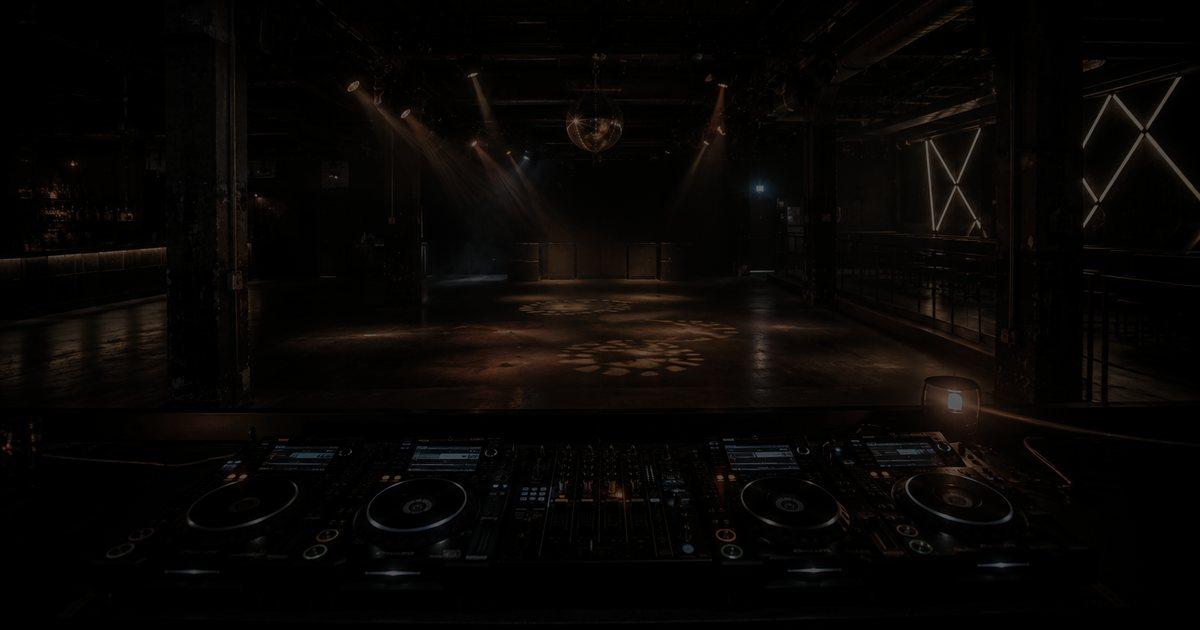
The Bronx, June 1993. At an outdoor party thrown by Back to Basics, the crew that came up after the Storm Raves, a fight breaks out, and the DJ, Frankie Bones, grabs the microphone. What he yelled has been repeated so often that it has become scene scripture: "If you don't start showing some peace, love, and unity, I'll break your faces." It is a wonderfully contradictory sentence, a threat wrapped around a peace slogan, and it is the moment most histories point to when they explain where PLUR came from. Three decades later the four letters are on festival merch and bead bracelets. Here is what they mean, where they came from, and whether they still matter.
What does PLUR stand for?
PLUR stands for Peace, Love, Unity, Respect. It is less a rulebook than a shorthand for how people are supposed to treat each other at a rave: leave aggression at the door, look out for strangers, accept that the person next to you may look, dress and live nothing like you, and do not take more space, water or patience than you give back.
The four words split into two halves. Peace and respect are about restraint: no fighting, no grabbing, no pushing to the front. Love and unity are about generosity: sharing water, checking on someone who looks lost, treating a dance floor of strangers as one crowd for a night. That balance is why the idea survived: PLUR is both a mood and an expectation of behaviour.
Where did PLUR come from?
The phrase grew out of the early-1990s New York rave scene around Frankie Bones and his brother Adam X. Bones had played to a huge crowd at an Energy rave in England in August 1989, and came home wanting to recreate that feeling in Brooklyn. The first Storm Rave took place in May 1991, and the parties grew from a few hundred people to thousands.
The slogan predates the famous microphone moment. On 4 July 1990, "Peace Love Unity" was painted on a subway car, an act credited to Adam X, and the early motto was sometimes written as PLUM, the "Peace Love Unity Movement". Storm Rave itself ended in December 1992, and in May 1993 Bones released a record titled "Peace, Love, Unity (The STORMrave Story)". The fight in the Bronx a month later simply gave the words their most quotable origin story. It also helps to know that "peace, love, unity" was not new in New York music culture: hip-hop's Universal Zulu Nation had used the motto "Peace, Love, Unity and Having Fun" since the 1970s.
The fourth letter arrived online. "Respect" is generally credited to Laura La Gassa, an East Coast raver active on the Northeast mailing list ne-raves, who set out the four words in a June 1993 post there and said she had first heard "respect" from a raver in San Francisco. Such lists were springing up in parallel: ne-raves was founded at MIT in 1992, the same year Brian Behlendorf, then a Berkeley student, started SFRaves, which grew into the Hyperreal.org website. So PLUR is, fittingly, a collaboration: a New York rave slogan, finished off on one of the first online music communities. Like the flyers that spread the parties, the word travelled through networks rather than through any official channel.
The ideals are older than the acronym. David Mancuso's 1970 invitations reading "Love Saves the Day" described much the same thing, which is why the story of The Loft is where the ethic of the modern dance floor begins.
What is kandi and how do you trade it?
Kandi is handmade beaded jewellery, most often bracelets strung from brightly coloured pony beads on elastic cord, frequently spelling out words or names with letter beads. It began appearing in the Southern California rave scene in the early 1990s. The name is usually explained as a play on "candy", which it sounds like. It ranges from simple "singles" to wide multi-row cuffs.
The point of kandi is not to wear it but to give it away. Trades are done with the PLUR handshake, and while versions differ, the common sequence is:
- Peace: both people make a peace sign and touch fingertips.
- Love: each forms half a heart with their hand and joins it to the other.
- Unity: you clasp hands, fingers interlocked.
- Respect: with hands still joined, one bracelet is slid from one wrist onto the other person's.
A few unwritten norms matter more than the choreography. Kandi is traditionally made by hand, and many kandi kids see store-bought bracelets as missing the point. One common convention is that bracelets on the right arm are up for trade, while those on the left are keepsakes. Asking before you start a trade is basic courtesy, and refusing is fine. Pieces made for a specific friend or received at a meaningful moment are not expected to change hands.
Why did glow sticks and pacifiers end up in court?
The playful side of rave style had a darker legal chapter in the United States. In 2001, after a federal investigation of raves at the State Palace Theater in New Orleans, the venue's operators and promoters entered a plea agreement that required them to keep out pacifiers, glow sticks and other glowing objects, on the argument that they signalled ecstasy use. The ACLU sued on behalf of ravers and musicians, and a federal judge blocked the ban, treating the items as a form of expression rather than proof of a crime.
The fight continued in Congress. Senator Joe Biden's RAVE Act ("Reducing Americans' Vulnerability to Ecstasy") stalled in its original form, but a reworked version, the Illicit Drug Anti-Proliferation Act, was attached to the PROTECT Act and signed into law on 30 April 2003. It expanded the liability of anyone who makes a venue available for drug use. Critics, the ACLU among them, argued that it punished promoters for the actions of guests and discouraged organisers from offering visible harm reduction, because providing it could be read as admitting that drugs were present. That tension still shapes how American events talk about safety.
Is PLUR still a thing at raves today?
Yes, but not everywhere, and not in the same way. PLUR is strongest in the North American festival world, where kandi trades are part of the culture at large events such as EDC and at bass and trance shows. Big business has not buried it; if anything, festival brands such as EDC now put PLUR in their own messaging, and in 2023 the promoter Insomniac filed to trademark the word for clothing, which set off a fan petition with more than 10,000 signatures. Travel to a Berlin techno club or a UK warehouse party and you will rarely hear the word, even though the behaviour it describes, respecting space and looking after each other, is expected there too. The current American techno boom is interesting precisely because it mixes both traditions.
The criticism is real. Cynics say PLUR has been reduced to a logo on a T-shirt, and that "love" rings hollow at a festival where water costs a fortune. Others point out that a slogan about unity does little on its own to stop harassment or theft. Frankie Bones' own answer is disarming: people have always made fun of PLUR, but it is real for those who live that way.
The most useful way to read PLUR today is as the ancestor of things that now have job titles: awareness teams, consent policies, harm-reduction tents, "look after your mates" campaigns. The romance of the early 1990s has turned into procedures. That is not a betrayal of the idea; it is what the idea looks like once a scene grows up and festivals of every format have to put it into practice for tens of thousands of people.
The bottom line
PLUR began as a painted slogan, a hot-tempered warning over a Bronx PA and an addition from an early internet mailing list. It became the closest thing rave culture has to a creed. You do not need to trade kandi or learn a handshake to honour it. Give people space, help someone who is struggling, and leave the floor a little better than you found it. That was the whole idea in 1993, and it still is.
Frequently Asked Questions
What does PLUR stand for?
PLUR stands for Peace, Love, Unity, Respect. It is the informal code of rave culture: no aggression, look out for others, accept everyone on the dance floor and do not take more than you give.
Who invented PLUR?
No single person. The phrase "Peace Love Unity" came out of Frankie Bones and Adam X's Storm Rave scene in Brooklyn in the early 1990s, and "Respect" is generally credited to Laura La Gassa, who spelled out the four words in a June 1993 post to an early rave mailing list. Bones' June 1993 microphone warning at a Back to Basics party in the Bronx is its best-known origin story.
Is it rude to refuse a kandi trade?
No. Kandi trades are voluntary. Asking first is good etiquette, and it is fine to say no politely, especially for pieces with personal meaning. A common convention is that bracelets on the right arm are available to trade and those on the left are keepsakes.
Can you buy kandi instead of making it?
You can, but kandi is traditionally handmade, and many people in the scene feel that store-bought bracelets lose the personal meaning that makes a trade special. Simple single bracelets from pony beads and elastic cord are easy to make at home.
Do people say PLUR at techno clubs in Europe?
Rarely. PLUR language and kandi are mostly a North American festival tradition. European techno clubs expect the same behaviour, like respecting space and looking after each other, but usually express it through door policies and awareness teams rather than the acronym.
Read next
Culture
The Pirate Stations That Built UK Dance Music
Culture
Rave Flyer Art: The Illustrators Who Drew the Scene
Culture
Books About Techno and Rave Culture: What to Read
Culture
The Dance Festivals That Never Came Back
Culture
The Tape Packs That Carried Rave Across Britain
Culture