The USB Stick That Took Over the DJ Booth
How a few grams of plastic replaced the CD wallet, learned to carry a whole library in 2009 and now faces the cloud and streaming. The USB stick's story.
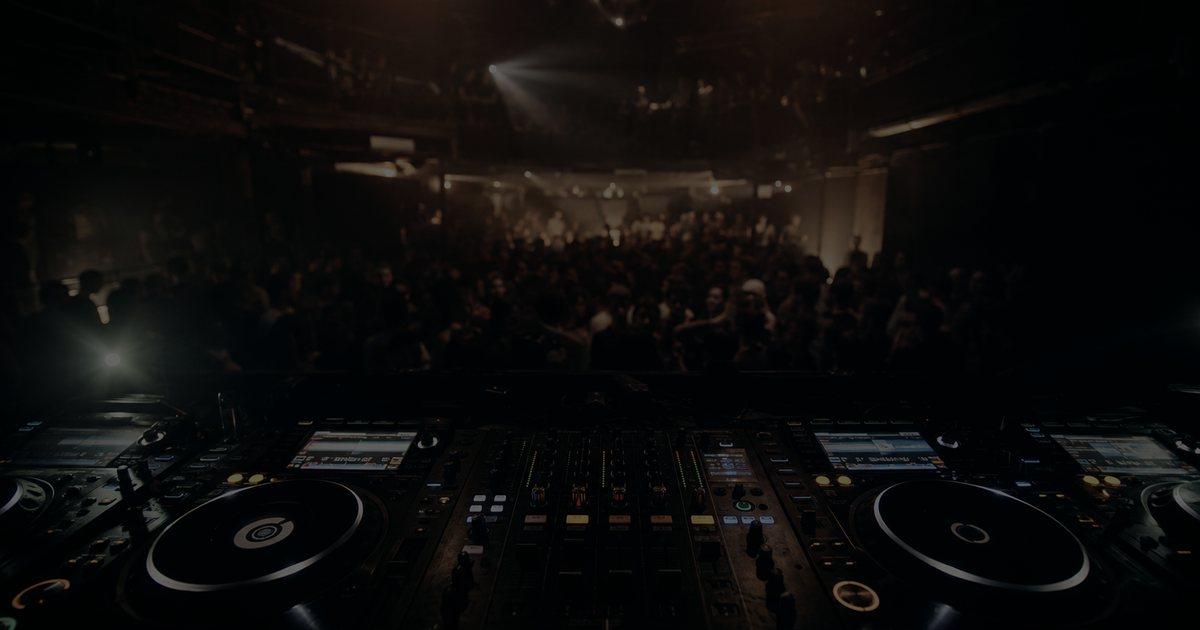
For roughly fifteen years, the most important object in a club DJ's life weighed a few grams. Not the headphones, not the record bag: a USB stick, usually two of them, one on a lanyard and one zipped into a jacket as backup. Lose the first in a taxi and the second saves the night. Lose both and there is no night. This summer AlphaTheta, the company behind Pioneer DJ, launched the XDJ-AN, a 1,149-euro all-in-one system whose standalone mode plays from USB, from the cloud and from streaming services, with a single USB-C port left for the stick. FAZEmag called it "the networker". It is a good moment to tell how a cheap piece of plastic came to run the DJ booth in the first place.
Before the stick: CD wallets and burned discs
Pioneer's first CDJ, the CDJ-500, came out in 1994, but the format only won the booth after 2001, when the CDJ-1000 added a jog wheel that behaved like a record under the hand. Until then the booth had belonged to the Technics turntable, one of the machines that built dance music. What followed was the decade of the CD wallet. DJs bought tracks as files, burned them onto CD-Rs, wrote the titles on with a marker and hoped the club's players were not too worn to read them. A disc held around 80 minutes of audio. A weekend's music meant a wallet of dozens.
It was lighter than vinyl, but it was still physical media with physical limits. Every disc had to be burned in advance, every set was confined to what you had packed, and nothing you prepared at home, no cue point, no note, no tempo, travelled with the music.
2007: a USB port nobody trusted
The first crack came in November 2007, when Pioneer announced the CDJ-400. It could play MP3 files from a USB device, which made it, by most accounts, the first CDJ to do so. In practice it was a curiosity. The port ran at USB 1.1 speed, DJ Worx's review at the time noted that only one USB device could be used per deck and that Mac-formatted drives were not supported, and the unit was a mid-range player rather than the club flagship. A stick on a CDJ-400 was simply a folder of files. The player knew nothing about the music on it.
September 2009: the stick learns to carry a library
That changed on 17 September 2009, when Pioneer unveiled the CDJ-2000 together with a piece of software called rekordbox. The player shipped in November at a suggested US price of 2,150 dollars. The hardware was impressive, with a large colour screen and USB and SD slots, but the software was the real turn. rekordbox analysed your tracks at home and wrote the results onto the stick: beatgrids, waveforms, cue points, loops, playlists. The CDJ read all of it the moment the stick went in.
Pioneer's launch materials also promoted Pro DJ Link, which let linked players share a single USB or SD source over a network cable, and a play history that could be loaded back into rekordbox as a playlist after the gig. Put together, it meant the stick was no longer a container for files. It was your library, already prepared, in your pocket. The work of DJing moved partly from the booth to the kitchen table, where tracks were sorted, cued and tagged days before anyone heard them.
How a stick became the global standard
The CDJ-2000 became the first link in a chain. The CDJ-2000NXS followed in 2012 and the CDJ-2000NXS2 in February 2016, and for years the NXS2 sat on technical riders worldwide as the default player. That standardisation is what made the stick so powerful. A DJ flying from Berlin to Bogotá no longer needed to bring anything but headphones and a few grams of flash memory, because the booth at the other end almost certainly ran the same players and read the same format.
The routine that grew around it is familiar to anyone who has played a club: the right file system so the player mounts the stick, the export the night before, a second stick with the same set, a backup of the library in case both disappear. Our guides to preparing a USB for CDJs and to backing up a rekordbox library exist because that routine still decides whether a set happens.
The format was also a business. Pioneer sold most of its DJ division to the investment firm KKR in a deal completed in March 2015, the company was renamed AlphaTheta in January 2020, and the Japanese holding company Noritsu Koki bought it later that year. Through all of it, the rekordbox export remained the language the club players spoke. Rival software had to work around it. Only in October 2025 did AlphaTheta, Algoriddim and Native Instruments announce OneLibrary, a shared export format meant to let other programs write sticks the players can read.
2020 to 2026: the cracks in the plastic
The first sign that the stick's monopoly would not last came in September 2020. The CDJ-3000 was the first flagship CDJ without a CD drive at all. A firmware update at the end of 2021 added CloudDirectPlay, which pulled tracks from a Dropbox-linked rekordbox library. In 2023 a firmware update brought Beatport Streaming to the CDJ-3000, so DJs with the right Beatport plan could load tracks from the store's catalogue without downloading them first. Later versions of rekordbox added syncing across several devices and playback directly from the cloud.
The XDJ-AN is the newest step in that direction, and it is aimed squarely at the bedroom and the small venue rather than the festival booth. It has two decks, a seven-inch touchscreen and a two-channel mixer. It launched with StreamingDirectPlay for Apple Music, Beatport Streaming and TIDAL, and a later update added Spotify. Each service needs its own subscription, and over WLAN it can load rekordbox cloud libraries. Telling is the detail FAZEmag points out: where its unofficial predecessor, the XDJ-RR, had two USB-A ports on top, the XDJ-AN has one USB-C media port at the back. The stick has not been removed, but it has been moved out of the spotlight.
The same review notes the limit of that new world. Beat Sync, Quantize and the full beatgrid require tracks to have been analysed in rekordbox beforehand. The cloud takes the stick's place as a carrier. It does not replace the preparation the stick made normal in 2009.
Why the stick is not dead yet
Ask a working club DJ whether they would trust a basement's Wi-Fi with a peak-time set and the answer is predictable. Streaming needs a connection, an active subscription and a track that is actually in the catalogue. Promos, unreleased edits, bootlegs and white labels are not, and they are often exactly what distinguishes one DJ's set from another's. A stick needs none of that. It works offline, it works in a field, and it works when the venue's network is shared with three thousand phones.
That is why the more likely future is not a clean replacement but a split. Bedroom DJs, mobile DJs and beginners on all-in-one systems will increasingly stream and sync, because for them the convenience outweighs the risk. Club and festival DJs will keep a stick in their pocket for years, now as insurance rather than as the only source. Whether you learn on a controller or on club players, a question we look at in CDJ vs controller, the habit of preparing the music before the gig stays the same.
The CD lost to the stick because the stick was better at everything that mattered in a booth. Streaming will only beat the stick where the connection is as reliable as a few grams of flash memory. Until then, the most important thing the USB stick ever did will outlive it: it turned DJing into something you prepare at home and carry with you, and every cloud library on the market is built on that idea.
Frequently Asked Questions
Which was the first CDJ with a USB port?
By most accounts the Pioneer CDJ-400, announced in November 2007, was the first CDJ that could play MP3 files from a USB device. It ran at USB 1.1 speed and was a mid-range player. The USB stick only became the club standard with the CDJ-2000 and rekordbox in 2009.
When did DJs stop using CDs?
There was no single date. USB sticks spread after the CDJ-2000 launched in late 2009, and in September 2020 the CDJ-3000 became the first flagship CDJ without a CD drive at all.
Can CDJs stream music without a USB stick?
Some can. A 2023 firmware update brought Beatport Streaming to the CDJ-3000 for certain Beatport plans, and newer all-in-one systems such as the XDJ-AN support several streaming services and rekordbox cloud libraries. Each service needs its own subscription and an internet connection.
Do I still need to analyse tracks in rekordbox if I stream?
For full functionality, yes. On the XDJ-AN, for example, Beat Sync, Quantize and the full beatgrid require tracks that have been analysed in rekordbox beforehand.
Read next
Guide
How to Back Up Your rekordbox Library (and Survive a Theft)
Guide
How to Play a B2B DJ Set: The Complete Guide
Culture
The Tape Packs That Carried Rave Across Britain
Scene
Hardgroove Techno Explained: Groove Over Brute Force
Guide
DJ Stems Explained: How to Mix With Stem Separation
Guide