The Machines That Built Dance Music (And Mostly Flopped)
Seven machines invented the sound of house, techno and rave — and most of them were commercial failures. What each one actually changed, and why.
In the early 1980s, engineers at Roland built three machines that almost nobody wanted. The TR-808 sold roughly 12,000 units before production stopped in 1983. The TB-303 managed about 10,000 before it was pulled in 1984. The TR-909 did around 10,000 and was gone by 1985. By the only measure a hardware company cares about, all three were failures. Within five years, second-hand copies sitting in pawn shops and small ads had been used to invent house, acid and techno.
That is the pattern behind almost every machine on this list. Dance music was not built on instruments designed for it. It was built on instruments designed for something else, which failed at that job, got cheap, and then landed in the hands of people who had no interest in the manual. Seven machines, and what each of them actually changed.
Roland TR-808: the drum machine that gave up on realism
The 808 arrived in 1980 at around $1,200 and was immediately outclassed on paper. Its rival, the Linn LM-1, used recordings of real drums. The 808 used analogue circuits, and it sounded like circuits: a kick with no attack and an absurdly long decay, a cowbell nobody had ever heard before, a snare made of filtered noise. Studios wanted realism. This was not realism.
Then 1982 happened twice. Marvin Gaye built Sexual Healing around it, the first genuine hit to be carried by an 808. The same year, Arthur Baker produced Planet Rock for Afrika Bambaataa and the Soulsonic Force around an 808 played by a session programmer he found through a classified ad, a man remembered only as Joe, who was paid in cash and never credited. What changed was not a technique but a permission: a drum sound no longer had to pretend to be a drummer. Everything from Chicago house to modern trap is downstream of that decision. Roland killed the machine in 1983 partly because it could no longer buy the out-of-spec transistors whose noisiness gave the 808 its character — the flaw was the sound.
Roland TB-303: a bass guitar substitute nobody asked for
The 303 was launched in 1981 as practice equipment. The idea was that a guitarist rehearsing alone could program a bass line to play along to. It did not sound remotely like a bass guitar, it was miserable to program, and Roland discontinued it in 1984 after about 10,000 units.
What made it historic was a use case its designers never considered: turning the cutoff and resonance knobs while the pattern loops. In 1987 Phuture released Acid Tracks on Chicago's Trax Records and the squelch became a genre. The 303's contribution is bigger than acid house, though. It established that timbre in motion can be the hook — that a single sound changing shape over sixteen bars is enough to hold a dancefloor. Every filter sweep in modern club music owes it something. The full story of how that happened is worth reading in the history of acid house.
Roland TR-909: the kick every club still runs on
The 909 came out in 1983 as a hybrid: analogue kick, snare and toms, with sampled cymbals and hi-hats, and it was among the first drum machines to carry MIDI. It sold badly too, and production ended in 1985 at around 10,000 units. Producers in Chicago and Detroit — Frankie Knuckles, Derrick May, Jeff Mills among them — bought them second-hand for a fraction of list price.
Its legacy is the most physical thing on this list. The 909 kick is built from two things at once: an oscillator whose pitch drops fast, which produces the punch, and a separate short burst of noise on its own attack control, which produces the click. Together they cut through a loud room in a way a sampled acoustic kick does not. Four decades on, most techno and most house still starts from a sound that is either a 909 or an imitation of one. It is the closest thing dance music has to a standard tuning.
Technics SL-1200: playback equipment that became an instrument
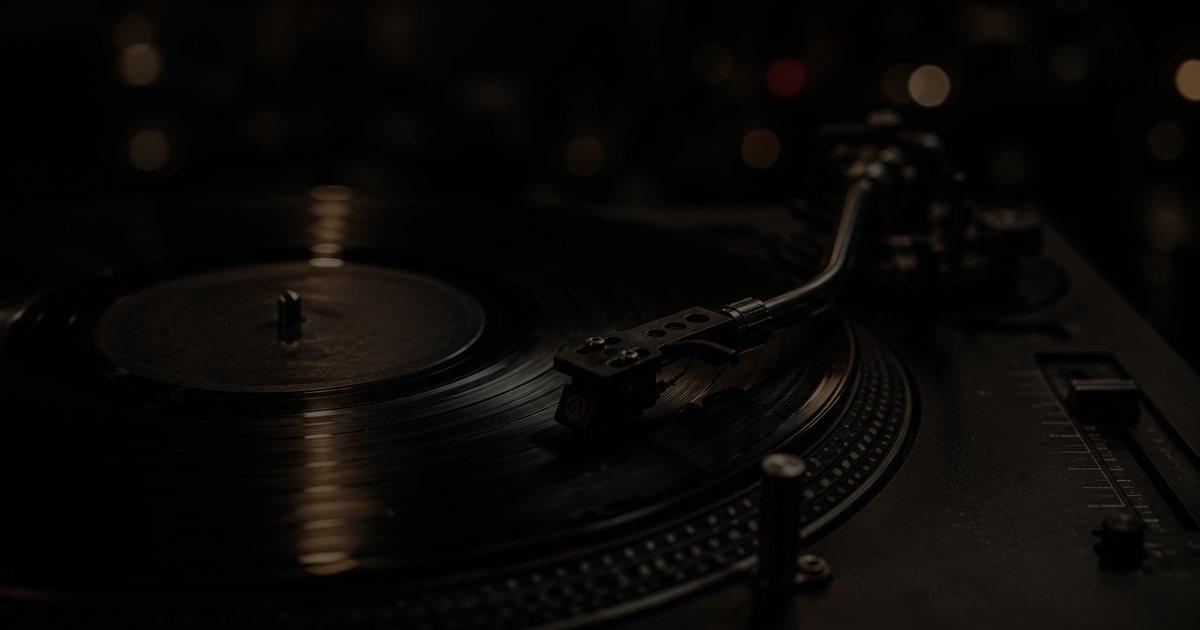
The SL-1200 launched in 1972 as a hi-fi turntable. The version that mattered was the MK2 in 1979, which added quartz lock and, crucially, a sliding pitch fader instead of a rotary dial. Direct drive meant the platter reached speed almost instantly and fought back when you touched it.
None of that was designed for DJs, and all of it turned out to be exactly what DJs needed. The pitch fader made beatmatching a repeatable craft rather than a lucky accident. The torque made scratching and backspins possible. The build meant clubs could bolt a pair down and forget about them for twenty years. Panasonic ended production in 2010, then reversed course in 2016 with the limited SL-1200GAE. The deck outlived its own obituary because vinyl DJing never actually stopped.
Akai S1000: rhythm becomes editable
Released in 1988 at close to $6,000, the S1000 was a 16-bit, 44.1 kHz stereo sampler — CD quality, at a moment when most affordable sampling was gritty and 12-bit. It was successful enough that its disk and file format became a de facto industry standard, which is a rare thing for any instrument.
Its effect on British music was disproportionate. Breakbeat hardcore and then jungle were made by producers looping, chopping and pitching drum breaks, above all the Amen break: four bars of drums from Amen, Brother, the B-side of The Winstons' 1969 single Color Him Father. What the sampler changed was the relationship to rhythm: instead of programming a pattern from scratch, you inherited seven seconds of a session drummer from 1969 and cut it into new shapes. That is a fundamentally different creative act, and it raised legal questions the scene is still negotiating — see our guide to sampling creatively and legally.
Korg M1: the one that actually sold
The M1 is the exception that makes the rest of the list legible. Introduced in January 1988, it was a workstation — synth, sequencer, effects and PCM samples in one keyboard — and Korg has claimed sales above 250,000 units, which would make it the best-selling synthesiser ever built. It was not a cult object. It was in every studio.
Its influence on dance music came through two factory presets. The M1 organ is the stab in Robin S's Show Me Love; the M1 piano turns up on Madonna's Vogue and across early-90s house. There is a lesson in that which producers still resist: a preset used with total conviction can define a decade, while an original patch used timidly defines nothing. It also dates a record instantly, which is why those sounds now read as period signatures in much the same way synthwave deliberately reaches back for the gear of the same era.
Ableton Live: the machine that is not a machine
Live 1 shipped on 30 October 2001 and could not even record MIDI. It did one thing: it triggered audio loops and kept them in time, using real-time timestretching that Ableton called warping. Tempo stopped being a property baked into a recording and became something you set afterwards.
That single idea reorganised the whole field. It made laptop performance viable, it collapsed the distance between DJing and producing, and it meant a bedroom producer could combine material recorded at different tempos without a studio full of hardware. Every machine above this one is an object you had to find and afford. Live is the point where the barrier stopped being the gear and started being the ideas — which is a harder problem, and the one the scene has been living with ever since.
The through-line is not that old gear sounds better. It is that these instruments were all used against their intentions, mostly by people who could only afford them because the market had already given up on them. The 808 was too fake, the 303 was useless at its job, the 1200 was for living rooms. Scenes are built by whoever is paying the least attention to what a thing is for.
Frequently Asked Questions
Why was the Roland TR-808 discontinued?
Roland stopped producing the TR-808 in 1983 after around 12,000 units. It sold poorly against sample-based rivals like the Linn LM-1 because it did not sound like real drums, and Roland could no longer source the out-of-spec transistors whose noise characteristics gave the machine its distinctive sound.
What was the Roland TB-303 originally designed for?
It was released in 1981 as a practice tool: a programmable bass line for guitarists rehearsing without a band. It convinced nobody as a bass substitute and was discontinued in 1984. Chicago producers later used it in a way its designers never intended, twisting the filter live, which produced acid house.
Why do techno and house still use the TR-909 kick?
The 909 kick combines an oscillator with a fast downward pitch envelope, which gives the punch, and a separate noise-based attack click, which gives the definition, so it stays audible on a loud club system without swamping the bass line. It became the reference sound in Chicago and Detroit in the late 1980s and is now effectively the default kick of club music.
Which synthesiser is the best-selling of all time?
The Korg M1, introduced in January 1988, is generally credited as the best-selling synthesiser ever made, with Korg claiming sales above 250,000 units. Its factory organ and piano presets became defining sounds of early-90s house, appearing on records including Robin S's Show Me Love.
Why was Ableton Live important for electronic music?
Live, first released on 30 October 2001, treated tempo as adjustable rather than fixed by using real-time timestretching, called warping. That made loops recorded at different tempos playable together and turned the laptop into a viable live performance instrument.
Read next
Culture
The Night Jeff Mills Played Techno With an Orchestra
Culture
Books About Techno and Rave Culture: What to Read
Culture
The Haçienda: The Club That Lost Money on Every Raver
Guide
Deep House Guide: Origins, Sound & Why It Endures
Scene
History of Progressive House: 90s Clubs to Today
Culture