The Track Robert Miles Wrote to Get Ravers Home Alive
In 1995 Robert Miles built a piano record to calm Italian clubbers before the drive home. Children became a number one across Europe and a warning.
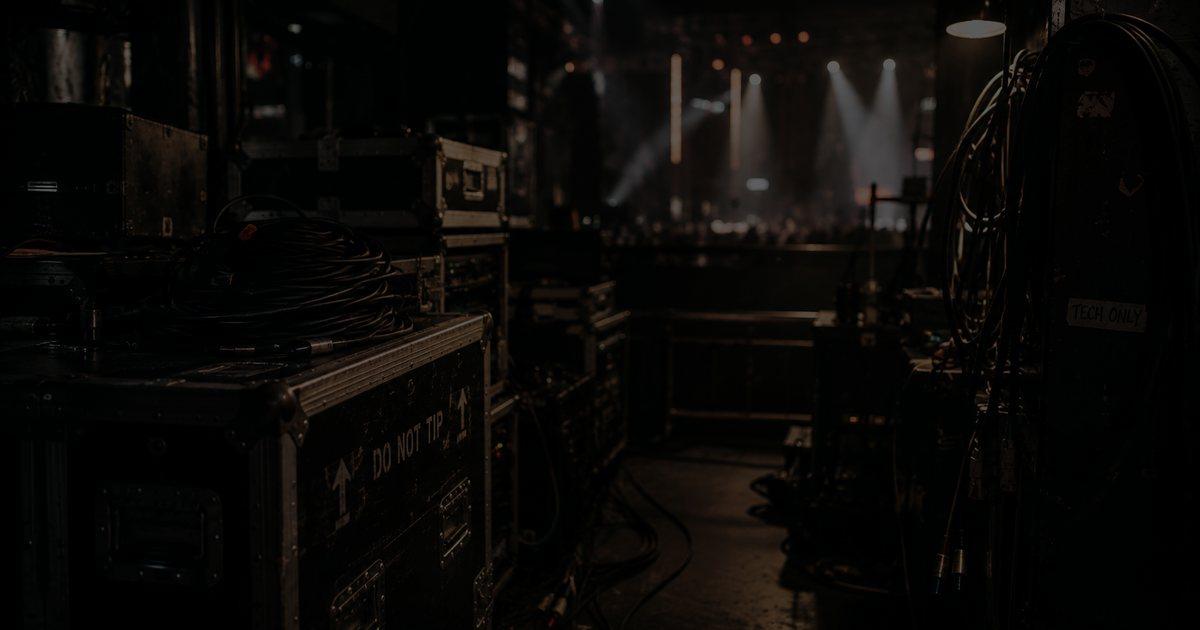
It is just after four in the morning somewhere in the Italian provinces, 1995. The club sits outside town, because they nearly all do, which means everyone in the room arrived by car and everyone in the room is about to leave by car. The DJ has spent five hours pushing the floor upward. Then he plays a record that does the opposite: a slow piano figure, no vocal, a kick you could walk to. People stop dancing and start looking for their jackets. That was exactly the point.
The record was Children. The man who made it was a DJ from Friuli named Roberto Concina, working as Robert Miles. Within a year it was number one in a dozen countries. It remains one of the very few dance records ever built with a purpose outside the dancefloor: to make the people in that room slightly less likely to die on the way home.
The drive home was killing Italian clubbers
Italy in the early nineties had a problem the press had already given a brutal name: strage del sabato sera, the Saturday night slaughter. The pattern repeated every weekend. Teenagers and twenty-somethings danced until dawn in a club thirty or fifty kilometres from home, got into a car exhausted, often drunk, and did not arrive. Retrospective accounts of the period put the toll from the phenomenon by the middle of 1996 at around 2,000 deaths. It was a running national news story, with parents' groups, parliamentary noise and repeated attempts to force clubs to close earlier.
Nightlife was on the defensive, and the people closest to the problem were the DJs. They saw the same faces every Saturday and knew perfectly well who was driving. The industry response was mostly regulatory and mostly resented. What nobody had tried was a musical response.
A DJ from a small town in Friuli who could play piano
Concina was born in Switzerland in 1969 and grew up in Fagagna, a small town in Friuli in north-eastern Italy, where he became a competent pianist as a child. He started working as a DJ in Italian clubs and on private radio stations in 1984, and in 1990 he put his savings into his own studio and his own pirate station. That combination explains the record better than any other fact about him: a keyboard player who could also read a room at four in the morning, with the means to act on both instincts without asking anyone's permission.
He assembled Children in 1994 around a piano line and an acoustic guitar figure. Its emotional weight came from somewhere else entirely. His father had returned from a humanitarian mission in the former Yugoslavia carrying photographs of child victims of the war, and Miles said afterwards that every track he ever produced came out of whatever he had lived through in that period. The title is not decoration. But the object he built out of that feeling was functional: a piece slow enough, warm enough and long enough to end a night on.
It sold about three thousand copies and nearly vanished
Children first appeared in Italy in January 1995 on DBX, the label run by producer and DJ Joe T. Vannelli, as part of a release called Soundtracks. Almost nothing happened. By Miles' own later account it shifted somewhere around three thousand copies, an unremarkable number for a club twelve-inch that was heading straight for the second-hand bins.
What rescued it was a booking in the wrong hemisphere. Vannelli took the record to Miami and played it at a club called Kimbo, where Simon Berry — who ran the British trance label Platipus — heard it and licensed it on the spot. Berry released it in Britain on 13 November 1995, working with Vannelli and with James Barton of Liverpool's Cream; Deconstruction followed on 12 February 1996. By the following summer it had reached number two in the UK, number one across much of continental Europe, and number 21 in the United States — territory instrumental European dance records almost never reach.
The last record of the night is its own craft
Almost all dance music is engineered for the peak. Children inverted the assignment, and in doing so exposed how little thought most DJs were giving to the shape of the last twenty minutes. Opening and closing are the two positions where a DJ is judged on restraint rather than impact: a warm-up set has its own internal logic, and the close has another one. You are managing an exit, not manufacturing another climax.
There is a hardware footnote here too. The nineties studio was full of instruments being used for purposes their designers never imagined, and the piano patch that carries Children — a sound most club producers of the era considered soft, sentimental and commercially useless — is a good example of the pattern that runs right through the machines that built dance music. Clubs and records shape each other in the same way. Manchester's Haçienda bankrupted itself building a room that changed what British records sounded like; provincial Italian discoteche, with their car parks and their long drives home, quietly produced a demand for a record nobody had thought to write.
The genre it created, and the exit its author took
What followed was a small wave with a name: dream trance, sometimes dream house, roughly 1995 to 1998, defined by piano lines standing in for the usual trance leads. Italian producers such as DJ Dado, and German acts like Zhi-Vago, pushed it further; for two or three years the piano was a legitimate lead instrument in a genre that had previously had no use for it. If you want the longer arc of how the slow build became a European speciality, it runs through progressive trance as much as it runs through Miles.
His album Dreamland arrived on 7 June 1996, took a pan-European platinum award and went platinum in Germany, Switzerland and Britain, carrying Fable behind Children; One and One, with Maria Nayler, was added to the later US and winter editions. In 1997 he won the Brit Award for International Breakthrough Act, and remained the only Italian ever to take that category before it was discontinued in 2012. Then he did the least commercial thing available to him. The follow-up 23am, released in December 1997, sold poorly. He had moved to London, signed deals he then spent years fighting his way out of, and only got back to making the music he wanted once he was out of them. When he re-emerged with Organik on 11 June 2001 — the first album he recorded and produced independently after leaving his record company — the piano trance was gone entirely, replaced by ambient texture and tribal percussion. It sold a fraction of Dreamland. He appeared entirely content with that.
What is left of it
Miles eventually settled in Ibiza and in the early 2010s launched Open Lab, an FM and online radio station broadcasting from the island with a playlist that had almost nothing to do with the music that made him famous. He died there on 9 May 2017 of metastatic cancer, aged 47.
Children now gets played as nostalgia, wheeled out at closing time for people who were fifteen when it charted. That is a slightly unfair fate for it. Strip away the sentiment and it is one of the most purposeful records dance music has produced: a piece of functional design, made by someone who understood that the DJ's job does not end when the lights come up. There is a version of this craft that treats the last record as an afterthought, and a version that treats it as a responsibility. Miles built an entire career, briefly and accidentally, out of the second one. Somebody in that room is driving.
Frequently Asked Questions
Why did Robert Miles write Children?
Two reasons ran together. The emotional trigger was a set of photographs his father brought back from a humanitarian mission in the former Yugoslavia showing child victims of the war. The functional purpose was the drive home: Italy was losing large numbers of young clubbers to weekend car crashes, and Miles wanted a slow, calm record that DJs could end the night on so people left the floor in a different state than they had been dancing in.
What genre is Children by Robert Miles?
It is generally credited with originating dream trance, also called dream house or dream dance, a short-lived subgenre that peaked roughly between 1995 and 1998. Its defining trait is a piano line taking the place of the synth lead that trance normally uses, over a straight four-to-the-floor kick and a much lower overall energy level than club trance of the same period.
When was Children released and how big was it?
It first appeared in Italy in January 1995 on Joe T. Vannelli's DBX label as part of the Soundtracks release and did close to nothing. Platipus released it in Britain on 13 November 1995 and Deconstruction followed on 12 February 1996. It reached number two in the UK, number one in a dozen countries and number 21 in the United States.
What does strage del sabato sera mean?
Literally the Saturday night slaughter. It was the Italian press term for the weekend road deaths of young people driving home from out-of-town clubs in the late eighties and nineties, usually exhausted and often impaired. It drove years of debate over club opening hours and was the social backdrop against which Children was written and received.
How did Robert Miles die?
He died of metastatic cancer on 9 May 2017 in Ibiza, where he had been living and running the radio station Open Lab. He was 47. By then he had spent well over a decade making ambient and experimental music that had almost nothing to do with the piano trance he is remembered for.
Read next
Scene
Eurodance Explained: The 90s Sound and Who Really Sang It
Culture
Books About Techno and Rave Culture: What to Read
Culture
The KLF: The Rave Act That Quit the Brits and Burned £1m
Culture
Charity Raves: Seven Benefit Nights That Changed the Scene
Culture
The Night Jeff Mills Played Techno With an Orchestra
Culture