Baile Funk Explained: Brazil's Sound That Went Global
Baile funk explained: where funk carioca came from, what the tamborzao beat is, its BPM and subgenres, and how Rio party music conquered the world.
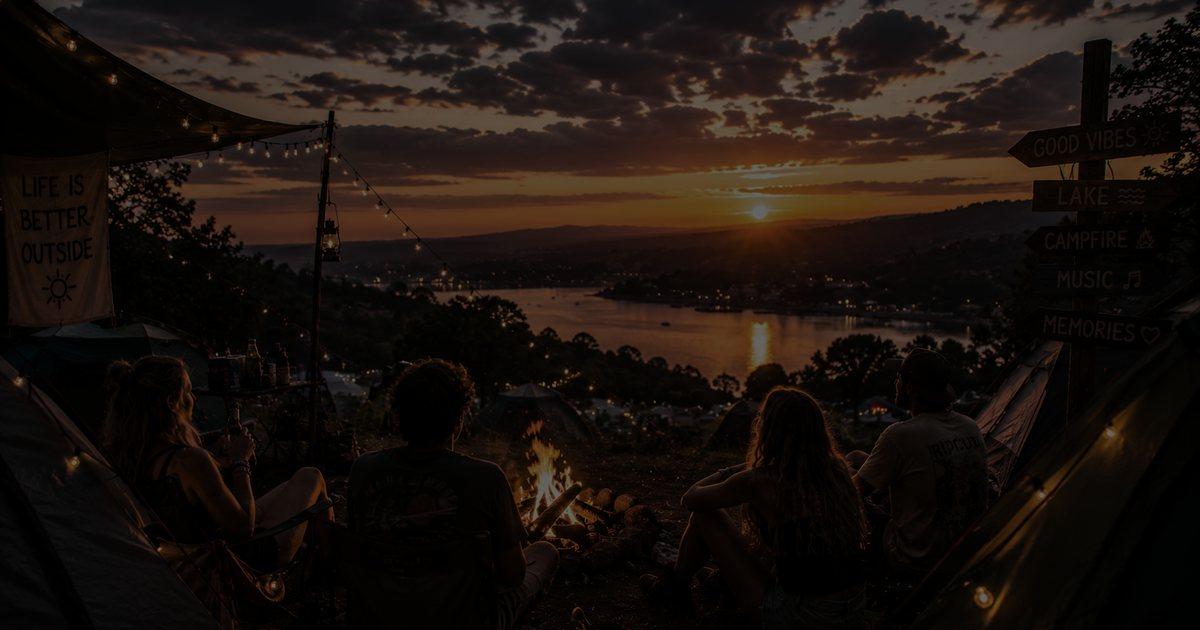
Walk up a hillside in Rio de Janeiro on a Friday night and you hear it before you see anything: a wall of sub-bass bouncing off concrete, a kick pattern that refuses to sit still, and an MC shouting a four-word hook over the top. That is baile funk. If you have opened TikTok lately you have already heard its descendants, whether or not anyone told you so.
It is also one of the most misunderstood sounds in electronic music. It shares a name with American funk and sounds nothing like it. It is described everywhere as a Rio genre, yet its most extreme strains come from Sao Paulo. One state government has treated it as a criminal problem and as protected culture within a single decade. Here is what it actually is, where the rhythm came from, and why DJs with no connection to Brazil are building sets around it.
What Is Baile Funk? The Name Explained
In Portuguese, a baile is a dance or a party. So "baile funk" originally described the event, not the music. The music is funk carioca - funk from Rio, since "carioca" means "of Rio de Janeiro". Outside Brazil the party name stuck to the records, which is why English-speaking DJs say "baile funk" while Brazilians usually just say "funk", pronounced closer to "funky".
Stylistically it has almost nothing to do with James Brown. Strip a track down and you find four things: a heavily syncopated drum pattern; a distorted 808 sub-bass; short repetitive vocal hooks in Portuguese, chanted rather than sung; and a deliberate rawness. Loudness, clipping and blown-out low end are not accidents here. They are the aesthetic, tuned for enormous stacked sound systems in the open air rather than for headphones.
Where Did Baile Funk Come From?
The lineage starts with the bailes black of 1970s Rio, huge dances held first in the South Zone and then across the suburbs, where DJs played imported American soul and funk to crowds of several thousand and, at the biggest, around fifteen thousand. When Miami bass and electro arrived in the 1980s, Rio DJs seized on them: cheap, drum-machine-driven, endlessly loopable, and suited to a party built around a sound system rather than a band.
The moment the genre stopped being a party style and became a recorded one is well documented. In September 1989, PolyGram released D.J. Marlboro Apresenta Funk Brasil, compiled by Fernando Luis Mattos da Matta, better known as DJ Marlboro. It put Portuguese-language vocals over the imported electro-bass template and sold in numbers nobody in the scene had seen before. Almost every history treats it as ground zero.
What followed was a decade of near-total self-publication. Tracks were made in bedrooms and sold at the parties themselves, on cassette, then CD-R, then file-sharing sites. That is why the sound mutated so fast and why so little of the early catalogue is archived.
What Is the Tamborzao Beat?
If one thing separates funk carioca from every other club genre, it is the tamborzao. In 1998, DJ Luciano Oliveira programmed patterns from Afro-Brazilian percussion traditions - candomble, capoeira and maculele - into a drum machine and welded them onto the Miami bass framework. The result became the rhythmic signature of Brazilian funk, and remains its backbone today.
The detail matters for anyone trying to mix it. The tamborzao is a heavily syncopated sixteenth-note pattern with a pronounced swing, closer in shape to the 3-3-2 tresillo behind dembow than to the even grid house and techno are built on. That is why funk always sounds like it is leaning forward, why quantising it flat in a DAW kills it, and why beatgridding it in DJ software is so often a mess. In that respect it behaves a little like UK garage, another genre whose identity lives in the shuffle rather than the tempo.
Baile Funk BPM and the Subgenres That Matter
Most classic funk carioca sits between roughly 130 and 150 BPM, with some strains running faster. But tempo alone tells you very little, because the genre has split into regional dialects that sound genuinely different from one another.
- Funk carioca - the Rio strain, tamborzao-driven, the reference point for everything else.
- Brega funk - from Recife in the northeast: more melodic, more romantic, and built around passinho footwork. It is often written at a fast tempo, but the half-time feel makes it read as slower.
- Funk mandelao - the Sao Paulo strain that emerged from the city's peripheries in the 2010s, tied to the "fluxos", the street parties that take over whole blocks. Darker and more minimal than the Rio sound, built on blown-out bass and dry, metallic percussion.
- Bruxaria - literally "witchcraft", a mandelao offshoot that emerged around 2019 and broke out in the early 2020s. Distorted, ritualistic, close to noise at its extremes. This is the strain now bleeding into techno sets abroad, and DJ K is the name to start with.
- Automotivo and ritmada - further mandelao branches. Automotivo comes out of car sound-system culture and, unlike most funk, tends to sit on a four-to-the-floor kick. Ritmada is lighter and more song-focused, with more weight on the lyrics.
Why Baile Funk Was Criminalised, Then Protected by Law
No account of this scene is honest without the politics. A subset known as proibidao - "the very forbidden" - carries lyrics referencing the drug factions that control parts of Rio's favelas, and that association was used to frame the whole culture as criminal. Rio state passed Law 3410 in 2000 setting conditions on funk parties, and in 2008 the so-called Alvaro Lins law tightened those restrictions further, effectively making spontaneous bailes impossible to hold legally.
Then the pendulum swung. In September 2009, Rio state passed Law 5543, which defined funk as a musical and cultural movement of a popular nature, named its performers agents of popular culture, and prohibited discrimination against the movement and the people in it. The Alvaro Lins law was repealed in the same month. Recognition on paper, however, did not end the policing: reporting on the scene has documented continued crackdowns on parties long after the law changed.
Anyone who has followed European rave history will recognise the shape of this: a working-class party culture legislated against for who attends rather than what is played, much as happened to free party culture in Britain after 1994.
How Baile Funk Went Global
The first export wave came from outside Brazil. Two compilations landed in 2004: Diplo's mix Favela on Blast: Rio Baile Funk 04 and Daniel Haaksman's Rio Baile Funk: Favela Booty Beats. A year later M.I.A.'s Bucky Done Gun, co-written with Diplo for the album Arular, put the rhythm in front of a large international audience. That wave also drew a criticism that has followed it since: that foreign producers built careers on the sound without properly linking up with, or crediting, the Brazilian artists behind it.
The second wave came from within. Anitta, Ludmilla and MC Kevinho carried funk into mainstream Latin pop, and in March 2022 Anitta became the first Brazilian artist to top Spotify's Global Daily Top 50. Tellingly, the track that did it, "Envolver", is reggaeton rather than funk: the route to the global chart still ran through a more familiar format.
The third wave is happening now, and nobody planned it. Sped-up and slowed edits, "montagem" loops and the online category loosely labelled "Brazilian phonk" have made the funk rhythm a default sound of short-form video, often by producers with no connection to Brazil at all. Spotify's Loud and Clear report, published in March 2026, found Brazilian funk was the fastest-growing of the genres earning over 100 million dollars in royalties, up 36 percent on the year. It is the same arc that carried afro house and amapiano out of their home cities.
For a DJ, the practical takeaway is simple. Tamborzao-based funk is not a straight-grid genre, so it will not slot neatly between two tech house records; it works as a rupture rather than a blend. Automotivo is the exception that will actually beatmatch. The forty-year distance between a Rio baile in 1985 and a bruxaria track in a Berlin basement is not a dilution of anything. It is what a sound built for enormous speakers in the open air was always going to do once it got out.
Frequently Asked Questions
Is baile funk the same as funk carioca?
Effectively yes, but the words started out meaning different things. In Brazil a baile is a party, so baile funk originally described the event where the music was played, while funk carioca means funk from Rio de Janeiro and describes the music itself. Outside Brazil the party name attached itself to the records, so the two are now used interchangeably. Brazilians themselves usually just say funk.
What BPM is baile funk?
Most funk carioca sits roughly between 130 and 150 BPM, with some strains running faster. Tempo alone is misleading, though, because the tamborzao is a heavily syncopated, swung sixteenth-note pattern rather than an even grid, so a 140 BPM funk track feels nothing like a 140 BPM techno track.
What is the difference between baile funk and Brazilian phonk?
Brazilian phonk is a mostly online, largely non-Brazilian category built from funk elements: sped-up or slowed loops, heavy reverb and hyper-repetitive montagem edits designed for short-form video. Baile funk is the source culture, a party music from Rio and Sao Paulo with its own regional strains, MCs and history.
What is funk bruxaria?
Bruxaria, meaning witchcraft, is an offshoot of Sao Paulo funk mandelao that emerged around 2019 and broke out in the early 2020s. It is darker, heavily distorted and close to noise at its most extreme, and it is the strain currently crossing into techno and club sets outside Brazil. DJ K is one of its best-known producers.
Can I mix baile funk into a house or tech house set?
Tamborzao-based funk will not blend cleanly, because its swung, syncopated groove does not lock to a straight four-to-the-floor pulse, and beatgridding it in DJ software is often unreliable. It works best as a deliberate break in energy, dropped on a phrase boundary rather than layered over an outgoing track. Funk automotivo is the exception, since it sits on a four-to-the-floor kick.
Read next
Scene
Jersey Club Explained: Newark's Sound, BPM and History
Scene
Berlin Techno Scene: Inside the World's Techno Capital
Culture
Gqom Explained: Durban's Sound, Origins and Key Artists
Culture
Too Old for Clubbing? Why Dancing After 40 Makes Sense
Culture
Charity Raves: Seven Benefit Nights That Changed the Scene
Culture