Event Insurance and Security: What Promoters Must Budget
What event insurance and security really cost a promoter: liability cover, door staff ratios, who is liable and what Martyn's Law changes from 2027.
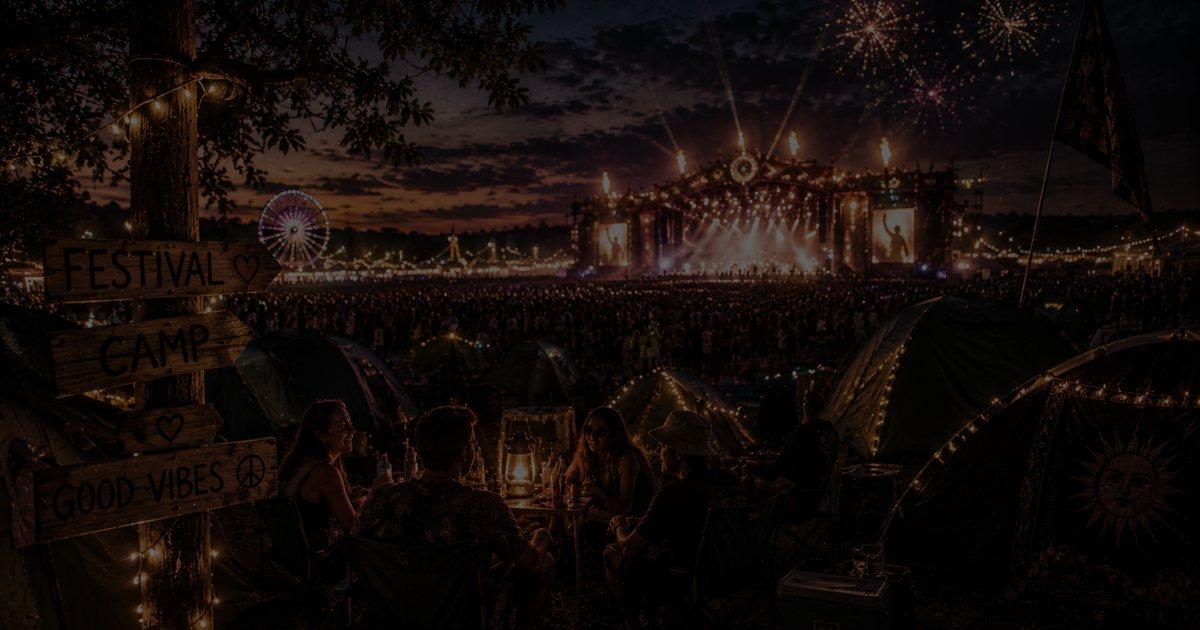
Shortly after 2:30 a.m. on 30 August 2026, as the open-air techno event Aarau Rave VOL. 7 was winding down on a horse-racing track in Aarau, Switzerland, shots were fired into the crowd still on site. A 22-year-old woman was killed and five people aged 24 to 31 were wounded. Aargau cantonal police arrested a 43-year-old suspect the following night and are working on the assumption of a lone perpetrator; the motive remains unclear. It is the kind of night no promoter plans for, and precisely the kind of night every line in a promoter's paperwork quietly exists to answer for.
Most promoters learn the safety side backwards: they book the room, book the DJ, sell the tickets, and only then discover that the venue wants a certificate of insurance and the licensing authority wants a stated number of door staff. Those are not overheads you trim at the end. They are the floor under which the event cannot legally or sensibly happen, and they belong in the budget before the headline fee is agreed.
Do you legally need insurance to run a club night?
In most jurisdictions no statute says "thou shalt insure a party." The obligation arrives commercially, through the venue hire agreement. Nearly every hire contract requires the hirer to produce a public liability policy (general liability in the US) before load-in, often with a stated minimum indemnity limit and the venue named as an additional insured. No certificate, no keys.
Three separate covers get confused with each other, and they do different jobs:
- Public/general liability covers injury to guests and damage to third-party property — the one venues demand.
- Employers' liability covers people working for you. If you engage bar staff, stewards or runners directly rather than through the venue, this can be a separate legal requirement.
- Event cancellation covers your sunk costs if the show does not happen — a headliner grounded, a storm, a licence pulled. Separate from liability, and for outdoor events usually the pricier of the two.
What liability cover does not do is turn negligence into someone else's problem. Insurers pay against a claim; they do not rescue a promoter who ignored a capacity limit or staffed a door with unlicensed people.
How much does event liability insurance cost?
Less than most first-time promoters fear. One-off policies for small events are quoted from double-digit sums, and US brokers advertise concert cover starting in the low hundreds of dollars, with a couple-of-thousand-capacity music event typically landing in the few-hundred range. Liquor liability and participant-injury cover are usually priced on top.
Underwriters price headcount, alcohol, standing versus seated, indoor versus outdoor, and the indemnity limit you choose. A seated 300-capacity room is a different risk from a 3,000-person field with one access road. The useful conclusion is proportion: insurance is normally the cheapest of the three safety lines, security staffing is the expensive one, and outdoors medical provision runs it close. If you are cutting anything, it should not be the item that costs a fraction of one DJ fee.
How many security staff does an event need?
There is no universal ratio, and anyone quoting one as law is guessing. What exists is a mix of licence conditions, industry convention and risk assessment. In the UK, one door supervisor per 75 to 100 customers is ordinary practice in clubs and bars, and licensing authorities have been known to attach a stricter condition — one per 50 attendees for disco-type functions — directly to the premises licence. That ratio is a starting point, not a ceiling: a guest DJ drawing an unfamiliar crowd, a late finish or an open layout all push it up.
Germany regulates the process rather than the number. Under section 43 of the model assembly venue ordinance (Versammlungsstättenverordnung), the operator must draw up a security concept and put a stewarding service in place where the nature of the event requires it, and that concept itself fixes the minimum number of stewards by visitor numbers and hazard level. Above 5,000 visitor places it must be agreed with police, fire and rescue services — meaning the authority, not the promoter, has the final word on staffing.
Whatever the framework, the cost driver outdoors is perimeter. An indoor club has one door and four walls someone else already paid for; a field has a fence line to watch all night, which is where open-air staffing budgets pull away from the equivalent indoor show. If you are weighing formats, see our breakdown of the different EDM festival formats.
Who is liable if something goes wrong — the venue or the promoter?
Read the contract, because that is where it was decided. The venue usually holds the premises licence and carries liability for the building. The promoter is the hirer, and hire agreements almost always contain an indemnity clause pushing responsibility for the event itself — the crowd, the conduct, the programme — back onto the hirer.
Legal duty otherwise follows control, which is why the split matters most at the door. In the UK, carrying out door supervision duties without a Security Industry Authority licence is a criminal offence under the Private Security Industry Act 2001, whether the staff are in-house or supplied by a contractor. Booking cheap unlicensed "security" through a friend of a friend is not a saving; it is an offence with your name attached and an insurer with a reason to decline.
The exposure is at its most complete when you are also the venue. Promoters running warehouses, fields and one-off sites hold the licence, the safety plan and the liability at once, with no landlord to share it with — one of the first things to understand before starting a club night.
What Martyn's Law changes for rooms over 200 capacity
The UK's Terrorism (Protection of Premises) Act 2025, known as Martyn's Law after Martyn Hett, who was killed in the 2017 Manchester Arena attack, received Royal Assent on 3 April 2025. It creates two tiers: a standard tier for premises and events holding 200 to 799 people, and an enhanced tier at 800 and above with additional documented measures. The government set an implementation period of at least 24 months, so the duties are expected to bite from around 2027.
The significance for dance music is the threshold. Two hundred people is a mid-sized club room, not an arena. Small and mid-tier venues and the promoters who hire them will need written procedures and a named responsible person as a matter of law rather than good practice. Promoters elsewhere should not assume immunity: regulation of this kind travels, and insurers and venues often adopt the standard ahead of the statute.
How to build safety into a budget that still works
Treat security, medical and insurance as fixed costs set before the artist budget, not as the residual after everything else is paid. Get quotes for all three before confirming a headline fee: they scale with capacity in a way the DJ fee does not.
That is also the quiet economics of small rooms. A 300-capacity night pays for a minimum viable safety operation across 300 tickets; a 1,200-capacity night spreads a not-proportionally-larger one across four times as many. Promoters have been rediscovering this arithmetic for forty years, usually the hard way — the Haçienda in Manchester being the canonical example, as we told in the club that lost money on every raver.
Two habits pay for themselves. Put the numbers in writing with the venue: who provides the stewards, who counts the room, who calls a stop. Ambiguity there turns an incident into litigation. And keep the paperwork — risk assessment, staffing roster, licence conditions, insurance certificate — as one file per event. If anything ever goes wrong, that file is the difference between a defensible operation and a promoter's word.
None of this prevents what happened in Aarau. An armed attack on a crowd is not a staffing-ratio problem, and no promoter should be sold the fantasy that a bigger security budget makes a night immune. What the paperwork does is more modest and still worth doing: it decides in advance who is watching, who is trained, who can stop the music, and who pays when the worst case stops being hypothetical. On the small number of nights when that matters, it is the whole job.
Frequently Asked Questions
Do I need insurance to put on a club night?
There is rarely a law that says so directly, but almost every venue hire agreement requires the hirer to show a public liability policy (general liability in the US) before load-in, often with a minimum indemnity limit and the venue named as an additional insured. In practice that makes it compulsory: no certificate, no keys. If you engage staff directly, employers' liability can be a separate requirement.
How much does event liability insurance cost?
Less than most first-time promoters expect. One-off small-event policies are quoted from double-digit sums, and US brokers advertise concert cover starting in the low hundreds of dollars, with an event of a couple of thousand people typically landing in the few-hundred range. Price is driven by headcount, alcohol, indoor versus outdoor and the indemnity limit. Liquor liability and participant-injury cover are usually charged on top.
How many security staff do I need for an event?
There is no universal ratio. In the UK, one door supervisor per 75 to 100 customers is ordinary practice, and some licensing authorities attach a stricter condition such as one per 50 for disco-type functions to the premises licence. Germany instead requires a written security concept under section 43 of the model assembly venue ordinance, which fixes steward numbers by visitor count and hazard level; above 5,000 visitor places it must be agreed with police, fire and rescue services.
Who is liable if someone is hurt at my event, the venue or me?
Whatever the hire contract says, plus whoever actually controlled the risk. The venue normally holds the premises licence and carries liability for the building, while hire agreements typically contain an indemnity clause pushing responsibility for the event itself back onto the promoter. If you run your own site, you hold licence, safety plan and liability at once.
Does Martyn's Law apply to small clubs?
It applies lower down the scale than most people assume. The Terrorism (Protection of Premises) Act 2025 received Royal Assent on 3 April 2025 and sets a standard tier for premises and events holding 200 to 799 people, with an enhanced tier at 800 and above. With an implementation period of at least 24 months, the duties are expected to take effect from around 2027, bringing written procedures and a named responsible person into mid-sized club rooms for the first time.
Read next
Business
Artificial Streaming Explained: Why Spotify Removes Streams
Business
Official Remix Fees: What Labels Pay and What You Keep
Business
How to Start a Record Label: A Producer's Guide
Business
Why Distributors Reject Releases (And How to Fix It)
Business
How Beatport Charts Work — And What a Top 100 Is Worth
Business